James E. Akenson
Mary Kutter, Carter Faith and AI
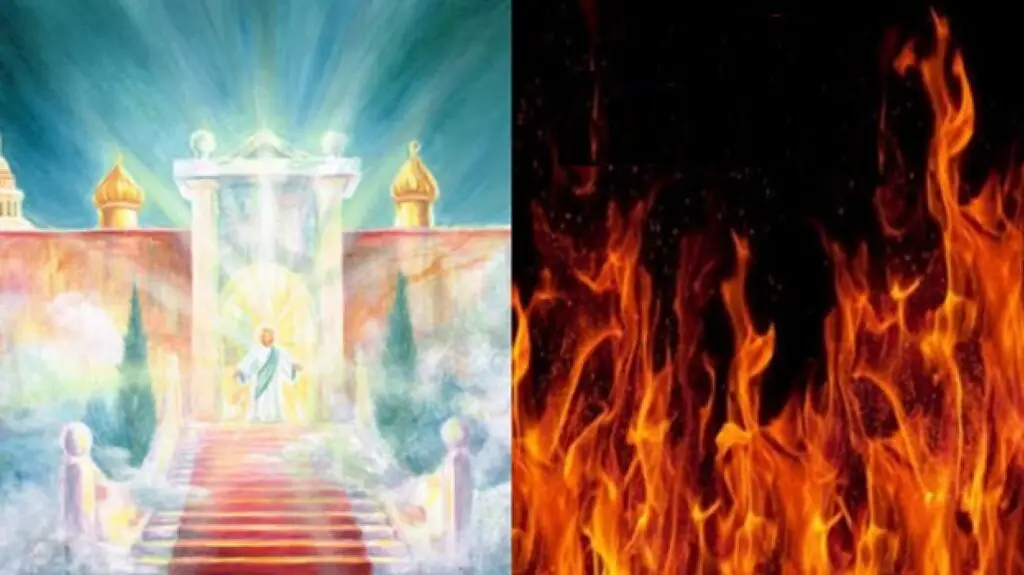
Over the years discussions of the Sacred and the Profane in Country Music have been seen in journals, books, conferences, and social media. My friend and colleague Randy Williams and I have labored in the Sacred and Profane vineyard for quite a while. In fact, Randy Willimas did his PhD dissertation at Tennessee Tech University on The Dichotomy of the Sacred and the Profane in Early Country Music. I got to be on his committee. Of course, since it’s about something religious and Country Music, you’re thinking that somehow the Bible Belt, Evangelical Protestantism, the second coming of Jesus, saved and lost, heaven and hell, Saturday sinners and Sunday Saints, and tortured souls will be involved. You’re not all wrong.
 Just what is the Sacred and Profane in Country Music you ask. Why should I work at giving you Randy Williams’ and my definition when AI….or A1 as U.S. Secretary of Education Linda McMahon calls it….can do it so much faster? Here it is. Thanks ChatGPT., You da AI boss. ChatGPT makes it clear that:
The sacred and the profane are at the heart of country music’s emotional and moral landscape. Country has always lived in the tension between Sunday morning and Saturday night — between salvation and sin, church pews and barstools.
Added to the pithy, succinct definition of my request are four important categories… to wit:
- The Sacred: Faith, Family, and Redemption
- The Profane: Sin, Desire, and Everyday Struggle
- The Tension: Country Music as Moral Drama and
- The Cultural Struggle.
I particularly like this fine summary since I don’t have to formally cite important scholars. Their work made ChatGPT possible. Eat your heart out Nolan Porterfield, Richard Peterson, and Randall Williams.
 I also like Part 3 The Tension: Country Music as Moral Drama. ChaptGPT says The power of country music often comes from the dialogue between the sacred and profane. The sinner prays; the believer backslides; the good woman loves a bad man. This dynamic gives country its narrative and emotional complexity.. Part 4 The Cultural Function says This sacred/profane duality also mirrors the cultural contradictions of country’s audience.
I’m just a tad confused since the first time around ChaptGPT suggested the Sacred and Profane aren’t contradictions — they’re part of the same story. The genre embraces both the highs of faith and family and the lows of heartbreak and sin. This dynamic creates a space for honesty, where listeners can confront their own flaws and beliefs without judgment. Lack of judgment though ain’t what I learned about at First Baptist Church in Minneapolis, Minnesota. And…self-righteousness is a form of judgment that Ray Stevens shares in Mississippi Squirrel Revival. The Sacred and Profane certainly co-exit, but there is a good bit of tension.
The continued presence of the Sacred and Profane in Country Music is impressive. Even with the decline of membership for the Southern Baptist Convention in the Bible Belt, the Death of God movement, and decrease in church attendance, the Sacred and Profane keeps appearing in Country Music. It even keeps appearing in young women Country Music artists. Some of the young women even combine the five letter word for female canine along with reference to Jesus Christ. The four letter word for lower gastro intestinal tract output also receives mention surprisingly often by young female Country Music artists. I don’t think Loretta, Dolly, or Tammy done-it-that-way. Not in public, anyway.

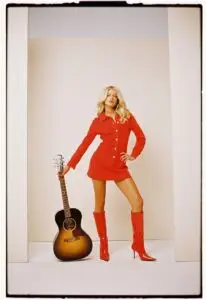
Two new artists come to mind that occupy the Sacred and Profane space. Mary Cutter and Carter Faith provide a nice sample. Mary Kutter provides a veritable Sacred and Profane machine. Raised in Kentucky and now Nashville based, Mary Kutter stays close to her roots. Kentucky based songs such as Devil’s Money, Bootlegger’s Bible, Bardstown and Talk to Yourself positively drip with the Sacred and Profane. In Bardstown Kutter opens with “in the name of our Father, Amen” and references “It is well with my soul” but goes on to describe a funeral of a baby. The Sacred and Profane can’t guarantee happy outcomes no matter the strength of your faith.
In Bootlegger’s Bible Kutter’s lyrics describe a Great Depression era Kentucky bootlegger who donates money for a new church, that the proof of his discipleship is his whiskey tinged gospel, and that “here lies a sinner and a saint.” Devil’s Money follows the same Depression era theme. “Somewhere between heaven and hell,” and that her great grandfather was a deacon who only made money when he started ‘runnin’ bottles out of the Bible Belt.
Kutter mines the Sacred and Profane in Talk To Yourself. She doesn’t end up blaming God for all the pain in the world and asks God “You’ve got our back but who’s got yours?” There’s a lot more to Mary Kutter including discussing that God is from the South and that Southern Sorority Girls are special. She also takes on issues about Big Pharma causing rural drug dependence.
Carter Faith from North Carolina combines her southern identity and knowledge of Evangelical Protestant theology. In her video of Leaving Tennessee Carter Faith presents a blonde , thin, jeans and boots imagery set in a pick-up truck in which she proclaims that she is a rolling stone but “I ain’t ever leaving Tennessee.” More to the Sacred and Profane point, Carter Faith addresses Evangelical Protestantism head on. In Grudge, Carter Faith mentions small town gossip including “bless your heart”, and that a friend told Caroline that she couldn’t write a song “to save my life.”
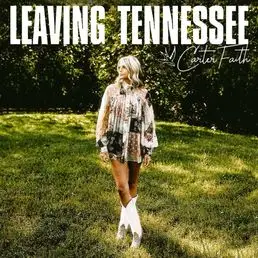 That provokes Carter Faith’s ire to the point that she mentions if she were “a good Christian woman,…I’d probably forgive.” Christian woman clearly means Evangelical Protestant and references Jesus and forgiveness. But Carter Faith isn’t up to forgiveness. She holds a grudge and claims to the sanctimonious good Christian woman that she’s “pretty sure even Jesus thinks you’re a bitch.” Carter faith then asks for someone to hold her beer because “I can’t hold my tongue” despite being able to ‘hold one hell of a grudge.”
All of this Sacred and Profane comes with an edge. An edge of being assertive and being willing to link Jesus and bitch yet set within a Country Music female demeanor viewed as traditional to today’s audience. And…her music follows a borderline tradition sound, she plays a guitar, and there’s a bit of twang. That’s the way to do it. Retain elements of traditional southern Evangelical Protestant culture at the same time you push the boundaries.
Mary Cutter and Carter Faith aren’t the only ones fitting into the Sacred and Profane by any means. The band Loula addresses “Who Get’s to Heaven?’ and concludes that “nobody knows and it might not be who you think.” Even chart dominator Morgan Wallen frequently mentions Jesus stating he’s not Jesus because he, Wallen, isn’t coming back. Despite his flaws Morgan Wallen knows something about the end times and the second coming of Christ.
The remarkable list goes on and on as each day new artists drop new material with Sacred and Profane references. From Kalsey Kulyk’s Till I Get To Heaven to Preston Cooper’s Weak, Elizabeth Nichols’ Bible Belt and Grace Tyler ‘s Jesus In a Bar the Sacred and Profane references don’t stop.,
Well there, you have it. New artists still reveling in the Sacred and Profane. But…since we referenced an AI definition of the Sacred and Profane shouldn’t I check AI about Mary Kutter and Carter Faith? Maybe I’ve got it all wrong. Well, here’s what AI says about Mary Kutter. “
Mary Kutter’s songwriting and performance style often weave together varied themes related to the Sacred and the Profane, blending spiritual imagery with worldly emotion, moral struggle, and human longing in ways that echo the deep traditions of country music.
Thank goodness! AI agrees.
What about Carter Faith? AI says “
Carter Faith engages with themes that straddle the “sacred” and the “profane,” though perhaps more subtly than you might expect. Her lyrics explore emotional intensity, moral tension, and religious imagery alongside conventional country-music subjects like heartbreak, love, and recklessness.
And AI, you think that the Sacred and Profane isn’t a lot about the tensions of heartbreak, love, and recklessness? It ain’t exactly Gospel Music. And I didn’t even mention Carter Faith’s Sinners in a Small Town.
I was hoping to write this article without any work. I thought ChatGPT could write it all. But no. I had to actually think a good bit to ask ChatGPT the Sacred and Profane questions. I had to think about investigating new artists in order to ask specific questions. There was actually a lot of time and effort to learn about new Country music artists such as Mary Kutter and Carter Faith before asking ChatGPT questions.
It took a lot of time reading, listening, and writing to be able to ask ChatGPT questions. That doesn’t include writing down the thoughts and sharing specific items before asking ChatGPT. In fact, I could write the entire article without AI. Come to think of it. That’s the way, the truth and the life, to get to the heart of the Sacred and Profane in Country Music. It’s human intelligence laboring in the fields and vineyards. Country on, y’all.