
James E. Akenson
Tennessee Tech University (Retired)
Cookeville, Tennessee, U.S.A
Country Music seems to be the Energizer Bunny. It keeps on running. There is an amazing number of books, articles, blogs, and social media postings about Country Music. When I first started learning about Country Music there weren’t lots of sources easily found. Now you can drown in all the good, bad, and indifferent sources talking about Country Music.
My career in Cookeville at Tennessee Tech University jump started my professional interest in Country Music. I’ve learned over the years that Country Music is far more complex than the usual joke about playing a Country music song backward…..get your truck back, girlfriend back, and so forth. I’ve learned a lot, but I’m afraid I still just know a drop in the bucket.
That drop in rhetorical bucket doesn’t just include the big picture of Country Music history that includes the 1927 Bristol Sessions (the Big Bang of Country Music)….the rise of Nashville as Music City , or the International appeal of Country Music.
The drop in the bucket includes the region of Middle Tennessee and southern Kentucky known as the Upper Cumberland. Cookeville, home to Tennessee Tech, sits in the Upper Cumberland region of Middle Tennessee. As I’ve learned about the complicated history of Country Music I’ve also come to connect it to Country Music in the Upper Cumberland.
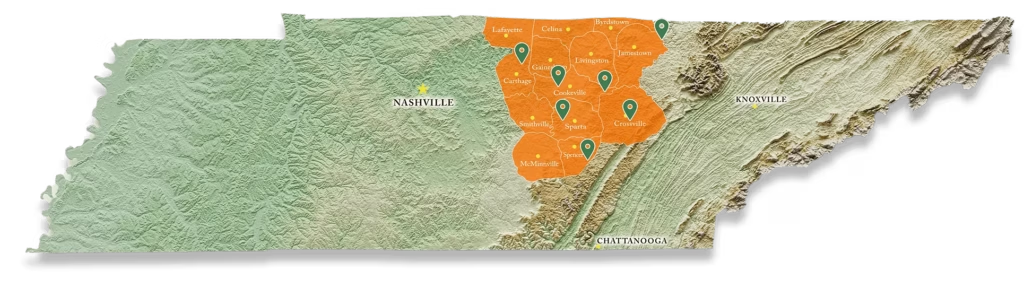
Recently, I presented a talk to the Cookeville History Museum. It was a talk given annually in honor of two Tennessee Tech history professors. Calvin Dickinson and Michael Birdwell made significant contributions as historians in many ways. I enjoyed knowing them and working with both of them. My talk? Country Music in the Upper Cumberland. The subtitle? The Big Picture Is The Small Picture Is The Big Picture.
Why the subtitle? Well, I’ve learned that virtually everything is interconnected in some way. I wanted to show the unique Country Music artists of the Upper Cumberland, but show they were connected to the big picture of Country Music.
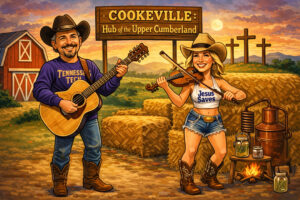
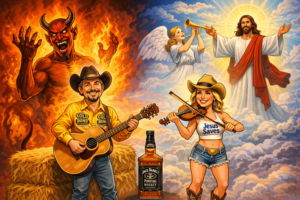
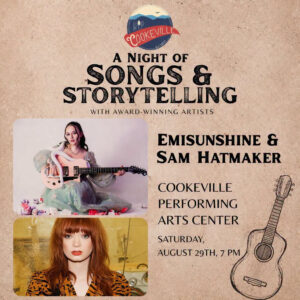
Of course, I had to publicize the talk on the International Country Music Conference FaceBook page and related FaceBook pages including the Hip FaceBook Page for Cookeville and other towns in the Upper Cumberland. I included an Ai generated image plus a ZOOM link so folks could attend virtually. I tried to make the Ai image a bit humorous while it got across some key ideas and images about Country Music.
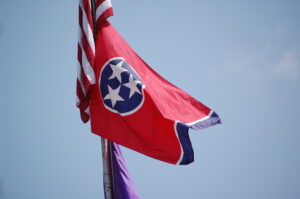 Well now, how might I develop the talk on Country Music in the Upper Cumberland? Besides showing the Tennessee State Flag….it has three grand divisions representing East Middle, and West Tennessee….since the Upper Cumberland in Tennessee is almost all in the Middle region. Folks understand the Tennessee state flag.
I also wanted to get the audience engaged rather than just listening and looking at slides. So…I had a slide that posted a question about some things that didn’t seem to have anything in common with Country Music. Take a look at the slide.
How about life insurance, Karl Marx, a flock of geese migrating in V formation, two cars crashing and other pics? Life Insurance connects to WSM radio owned by the National Life and Accident Company who sponsored the Grand Ole Opry.
Migrating geese relates to human migration. Lots of folks migrated out of Cookeville and the Upper Cumberland to Detroit…and elsewhere…and took their Country Music with them.
Karl Marx didn’t like capitalism, but he understood it. Country Music may be about the music. But…it’s also about the money. Can’t have social media, radio, telly, streams, records, sounds systems, artist management and so forth without having people and corporations making money. Two cars crashing relate to themes in Country Music and to issues of varied types that involve Country Music fans, artists, and the entire industry.
Before getting into the content, I asked the audience to talk to their neighbor about what could the items on the slide have to do with Country Music. Audience engagement is always primo. You can’t just drone on and on without having the audience participating.
Not only that, but I had the audience respond by giving a thumbs up signal if they had seen the Tennessee State Flag…duh!!…and knew what the three stars represented.
First off, I addressed the blind spot for many Country Music fans. Country Music is just for and by white folks. The Soul of Black Folks has been important in the making Country Music Country Music. Surprised? Don’t be! I showed an 1847 painting by William Sydney Mount The Power of Music. Take a look.
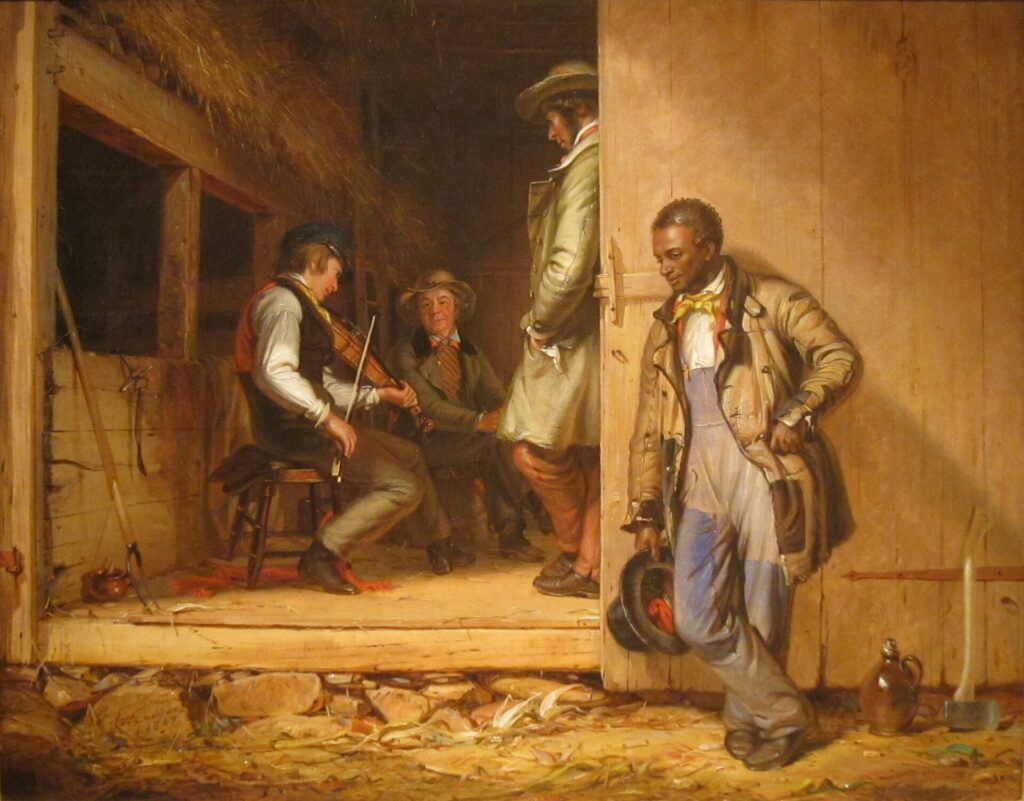
White folks are in a barn playing music. An African American male is standing outside listening. The racial system kept the African American outside the focus framed by the barn door. Yet he was very much taking in the music. African Americans have always been around and involved with Country Music.
Just think Jimmie Rodgers Blue Yodel Number 1 (T for Texas) with a Blues format Rodgers learned as a railroad waterboy working with African American gandy dancers fixing tracks. Volunteers pointed with a laser to the in group of musicians in The Power of Music and the person in the out group.
The next slides showed African American string bands from Upper Cumberland rural overwhelmingly white counties as well as Deford Bailey from Carthage in Smith County. DeFord Bailey became made a major contribution to the Grand Ole Opry.
The Opry, of course, used the technology of radio to reach listeners throughout the United States. The Big Picture is the Small Picture is the Big Picture.
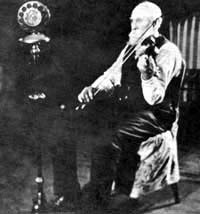
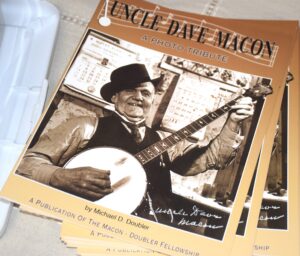
Likewise slides of Uncle Jimmy Thompson and Uncle Dave Macon made impact far beyond the Upper Cumberland region. Uncle Jimmy Thompson became legend for his fiddle performance in 1928 on WSM radio when George Hay provided the Opry name.
Uncle Dave Macon performed on the Opry, on records, and in film. Macon helped define crucial elements of Country Music performance and content. Both Uncle Dave and Uncle Jimmy showed that The Big Picture is the Small Picture is The Big Picture.
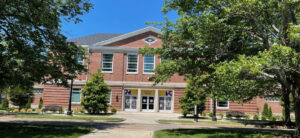
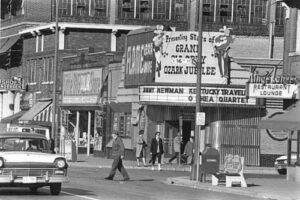
Memorial Gymnasium at Tennessee Tech provided an important component to Upper Cumberland Country Music. From the late 1950s to the mid 1970s Memorial Gym hosted a diverse set of acts including Country Music artists. Just think, Kenny Rogers, the Smothers Brothers, Linda Ronstadt, Flatt and Scruggs, Ray Charles, Minnie Pearl, Dottie West, and the Nitty Gritty Dirt Band.
The economics of the music business allowed for individual artists or package shows to include Tennessee Tech as a convenient stop between the major cities of Nashville and Knoxville. Yes, the audience had to respond as I pointed to different artists and indicate if they knew them and name a song.
And…yes…Ray Charles should be included in a Country Music discussion. He grew up listening to Country Music, recorded the classic album Modern Sounds of Country Music and appeared on The Johnny Cash Show.
Dottie West provided a special focus. West grew up in McMinnville (Warren County) and attended Tennessee Tech. West’s career included the Grammy winning Here Comes My Baby, an iconic Coca Cola Commercial, and a series of duets with Kenny Rogers. West transitioned throughout her career.
She left behind conservative styles to embrace Bob Mackie gowns and suits suggesting the impact of Second Wave Feminism. Tennessee Tech even held a special Dottie West Day to celebrate her success. Yet again, Dottie West shows The Big Picture is the Small Picture.
Lester Flatt couldn’t be left out of an Upper Cumberland and Country Music presentation. Born in Overton County near Livingston, Lester Flatt also lived in Sparta in White County where he rests in peace in Oaklawn Cemetery with his former wife Gladys.
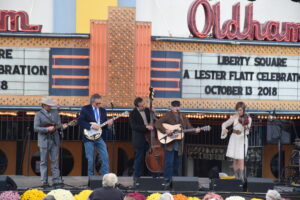
Every October a Saturday Lester Flatt celebration takes place in Sparta. The Lester Flatt Celebration reflects that Flatt and Scruggs helped popularize Bluegrass music including appearances on the television sitcom The Beverly Hillbillies. Let’s not forget Foggy Mountain Breakdown or the theme from the movie Deliverance.
I even thought to check Ai about Lester Flatt. If ChatGPT recognized Lester Flatt then he must be important. Indeed, Chatgpt confirmed the very things I mentioned about him. Once again, Lester Flatt is The Big Picture is the Small Picture is the Big Picture.
The slides just kept coming and coming. All sorts of concerts have taken place besides Memorial Gym. The new Tennessee Tech Hooper Eblen Coliseum hosted Alabama, The Statler Brothers, The Oak Ridge Boys, Garth Brooks, Barbara Mandrell and loads of others. All major acts connect to the Big Picture while appearing in the Small Picture of Cookeville.
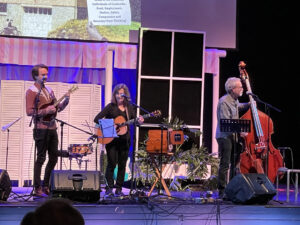 The beat goes on in varied ways. Concerts take place in larger towns within the Upper Cumberland. A Bob Dylan tribute concert featured an array of local talent including long time local talent The Ballinger Family Band previously known as The Cluster Pluckers.
While local, the Ballingers have had an extensive reach beyond the Upper Cumberland to working with Chet Atkins and performing on Austin City Limits. And yes…Bob Dylan grew up listening to Hank Williams and has recorded in Nashville. The Big Picture is the Small Picture is the Big Picture.
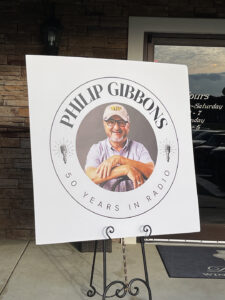 It’s necessary to include obvious local elements tied into the big picture. How about radio stations such as the historical WHUB 1400 and the powerful contemporary 94.7 The Country Giant that features DJs such as Philip Gibbons who guest announces on the Opry.
Former Country Giant employee Jake Hoot won the nationally televised The Voice competition. Aspiring Country Music artists constantly come from Nashville to appear as guests on Philip Gibbons mid-day program to build their careers. The Big Picture is the Small Picture is the Big Picture.
I think you’re getting the picture. A region of Middle Tennessee and Southern Kentucky known as the Upper Cumberland has a long Country Music tradition. It has unique individuals participating in unique ways. Yet the Country Music artists and experiences of the Upper Cumberland are tied into the big picture of Country Music history.
 Grocery shopping in Kroger I see Dolly Parton wines and baking products. My first year education class concluded the semester with a fiddle player and a guitar player leading the class in singing “The Tennessee Waltz.” Yes indeed.
The Big Picture is the Small Picture is the Big Picture.