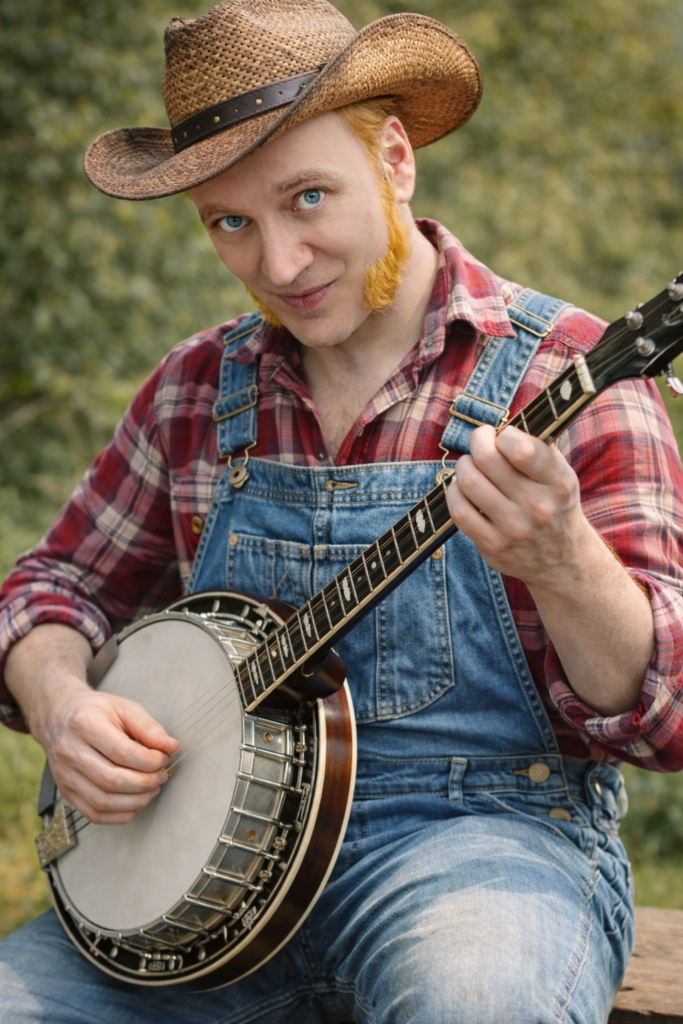
Jordi Guasch
from Barcelona (Spain)
Introduction by James E Akenson
Jordi Gausch: A Country Music Friend in Spain
There is a romance, a fascination with Country Music that transcends the traditional heartland of Country Music. Yes. Country Music does indeed have strong roots in the U.S. South…thank you Laney Wilson, Ella Lanmgley, Mary Kutter, and Carter Faith…but Country Music has always appealed nationally…let’s not forget WLS and the national Barn Dance from Chicago.
And, we can’t forget the migrations to the Mid-West and West during times such as the Great Depression that spread Country Music. If this were an academic piece, I’d use the germ Cultural Diffusion. We won’t even get into the role of World War 2, Australian Country Music, African Country Music and other goodies. Trust me, Country Music appeals to people beyond Twang Town (a.k.a. Nashville).
Let’s offer a bit of a ‘Case Study’….no, we’re not going to Harvard Law School…using Jordi Guasch Lopez. He goes more by Jordi Gausch. He’s from the Iberian Peninsula. That’s a fancy way of saying he is from Spain. Not exactly a traditional hot bed of Country Music. Thanks to the International Country Music Conference Jordi Gausch and I have been interacting for the last few years. I would never have guessed that a Country Music devotee would come from Spain.
Yet Jodi Gausch is an active writer, blogger, and musician. Take a look at this blog. Even if you’re not fluent in Spanish it will have some familiar terms. The pic certainly tells the story.
PODCAST “CORAZÓN COUNTRY” En: jordiguaschbardoviajero.blogspot.com.es (sección “Country Music”/ Spotify. La música country más pura y original, trascendiendo las convenciones e incluso, en ocasiones muy concretas, incluyendo otros géneros vinculados al mismo (corridos, rockabilly, zydeco, etc.). Abarcando todo tipo de épocas, tendencias, estilos, grupos, músicos y cantantes desde las primeras grabaciones country. Sorprendentes anécdotas e historias, y buen humor, además de curiosos conocimientos sobre los orígenes de las diversas facetas del genero. Cada cierto tiempo, nuevas grabaciones.
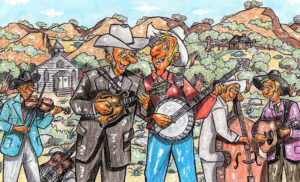
Gausch has dived into Country Music without the benefit seminars, college courses, conferences, or support from friends and family. I couldn’t do as well. He has been profiled in Country Music magazines, met George Jones, and co-written a book Country Music Stars. In addition, Jordi Gausch is an artist. He uses his artistic skills to illustrate his Country Music work. He is also working on The Birth of Country Music: When and Where Country Music Was Born as a possible book length publication. And, he writes in English far better that I can write…and read…in Spanish. No disrespect, Dr. Gary Collins when you taught me Spanish at the University of Minnesota.
Finally, I know my limitations. But…Ai knows EVERYTHING! I asked Ai if Jordi Gauch has an impact on Country Music writing. Ai said yes. Forget if any of my observations are valid. Here are some points Ai made about Jordi Gausch.
1. Jordi Guasch is a good example of what you might call a “cultural intermediary” rather than a formal scholar.
2. Someone who operates in the soft infrastructure of country music (fan culture, translation, interpretation)
3. He helps translate American country music culture into a Catalan/Spanish context.
4. His writings and illustrations make the genre accessible to non-U.S. audiences
5. In your Durkheim/Weber framework, he would likely fall into Sacred (authenticity-oriented) with a deep knowledge of traditional/old-time country and Soft shell with his communicating, interpreting, and diffusing rather than producing canonical scholarship.
I’d say that Ai has some positive things to say about Jordi Gausch’s work in Country Music. It certainly goes along with my belief that Jordi Guasch has done some remarkable work without benefitting from the formal organizations available to people in settings where artists and fans gather to perform and enjoy Country Music. Nor does Jordi Gausch live where there are Country Music radio stations, music industry centers like Nashville, conferences, or university courses available.
We will share a short discussion by Jordi Gausch about the controversial Civil War song Dixie. Dixie has been controversial in recent years along with the Confederate Battle Flag (the Rebel Flag) and Confederate Soldier monuments in town squares throughout the South. Both Dixie and the Rebel Flag have been increasingly seen as symbols of racial oppression. Dixie certainly has been controversial in recent years, but the creation and history of Dixie is fraught with controversy as well. There are numerous articles pieces about Dixie. There are also books about Dixie such as Way Up North in Dixie by Howard and Judith Sacks.
Jodi Gausch’s piece that we are sharing with you takes a different tack. Its title tells the difference. Is ‘Dixie’ Originally A Country Tune suggests that Jodi Gausch finds Dixie most interesting in context of Country Music history. He acknowledges the complex cultural mix of music genres in the U.S. He also references well known sources such as Nick Tosches, Robert Cantwell, and the voluminous research publication Country Music Sources. Gausch also touches on the controversy regarding the Snowden’s influence on the creation of Dixie.
Most significantly, Gausch’s piece should be interesting as it reflects the deep interest of a Country Music lover far outside the usual settings where Country Music is consumed and researched. His examples of early Dixie recordings in the 1920s by likes of Uncle Am Stuart and Dr. Daniel Dix Hollis provide specific examples of how Dixie fits into the merging commercial form we now know as Country Music. Luke Bryan sings that we should Country On. Jordi Guasch is certainly committed to Country On as he lives his daily life in Spain learning and sharing his thoughts about his chosen life in Country Music. He will “Keep On Truckin.’
Is “Dixie” Originally a Country Tune?
Jordi Guasch
Although commercial labelling did not start until the 20th century, Country Music has existed since the beginning of the 17th century, starting, initially, from the small changes that occurred in the Folk and Popular songs (including ballads, of course), fiddle tunes and religious music that the first settlers bring to future United States from the British Isles. Probably, the first one in the role of fiddle tunes was, as Nick Tosches noted, a man who came to Virginia in 1607 from London, and there in America he made some “wondrous new songs”.
It is assumed that with other types of music from the British Isles, new ones would also be produced, or changes made, to the old one turning into Old-Time country music.
It also seems plausible that black people performing that primitive Country Music shortly after the white people invented it in that 17th century. And, of course, even before this old Country Music got rich, during his own development, absorbing influences from other European music, a bit of Native Americans (especially Cherokees), Black peoples’ own music (Spirituals, Work Songs, Ragtime, Gospel, Jazz, etc.), American Pop music (marches, parlor songs, minstrel songs, etc.), Mexican music and Hawaiian.
Rhiannon Giddens has highlighted that African Americans have played a foundational role in what became known as Country Music since the 17th century. Her work as a musician and historian specifically highlights that string bands, banjo, and fiddle styles—key components of early American roots music—were heavily influenced by African traditions and Black musicians from the 1600s onwards.
Nick Tosches, for example, refers to a document about an Englishman who described a Southern party in 1774 and said: “A great number of young people met together with a Fiddle and Banjo played by two Negroes. .”
As Robert Cantwell wrote, Dan Emmett´s I Wish I Was in Dixie´s Land, which had strong echoes both of an old German hymn and of an English music hall song he used to sing in his youth, had a happy Scots snap and a exhilarating melodic scope; but it caught something too of the folk tonality emerging in the South. Emmett may have absorbed much southern folklore from local Negroes in his birthplace Mt.Vernon, Ohio, especially from the Snowden family, who had come from Maryland in 1827.
They were musicians, and earned a local reputation playing from a stage built into the gable of their house, said to be just across a field from Emmett´s. Ben and Lou, the Snowden brothers, played banjo and fiddle. Emmett is of course, wrote Cantwell, remembered now as the author of I Wish I Was in Dixie´s Land, but the Snowdens´gravestone north of town proclaims “They taught ‘Dixie’ to Dan Emmett.”
It´s clear that the Snowdens were performing Old-Time Country Music and his Dixie song was Country! And due to the boomerang effect, it would become a Minstrel song, and, as we know, the blackface minstrel Pop music influenced part of country music!
Since Country Music recording began, there have been many country versions of Dixie, starting with Dixie & Yankee Doodle (Dr. Daniel Dix Hollis) and Dixie (Uncle Am Stuart) in 1924 according to Country Music Sources (Guthrie T.Meade, Jr. with Dick Spottswood and Douglas S.Meade). But, who knows, maybe other country versions were recorded before.