James E. Akenson
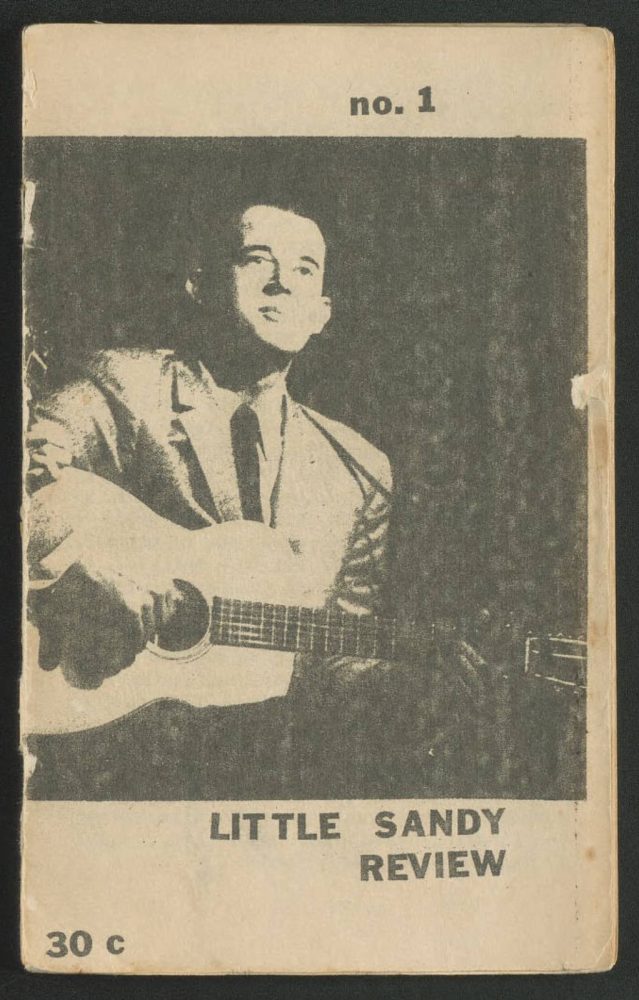
New York Yankees catcher Yogi Berra keeps coming up again and again as I go through life. Yogi Berra made famous the use of Deja Vu All Over Again. A touch repetitive. A touch redundant. But, it stuck in our cultural mind and heritage. Strangely, it speaks the truth. Things have a way of coming back into our lives at unexpected times. “The Little Sandy Review” came into my life during the early 1960s. It’s crossed my mind over the years. Just recently, the Little Sandy Review came back into my mind big time. Déjà Vu All Over Again.”
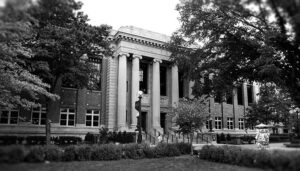
So let’s talk about origins in my life of “The Little Sandy Review.” (LSR) During my undergraduate years at the University of Minnesota, (UM) little old history major me, worked in The Periodical Room of Walter Library on the mall, the heart of campus. I paged….went back in the book stacks ….and got books and periodicals that patrons requested on slips of paper. One student handed me several slips with IBID on them.
Needless to say, I didn’t have a clue as to what they were. I didn’t even make a trip back in the stacks to find them, but earned something about citation. Thank you, Mrs. Wiste for the explanation. IBID means it is the same journal as the journal cited before it. You don’t have to write the journal name again…and again. So…all the IBID slips were for the same journal, but it wasn’t clear what journal was being cited. Both the patron and I learned something.
During my time in The Periodical Room I learned the names of a lot of journals. I even remember DeBow’s Review. I should have looked at it more carefully. From 1846-1884 it reflected ideas about agricultural, commercial, and industrial ideas for the South.
I could have learned some subtle lessons about race, economics, and even The New South. The “Mid Continent Mortician” seemed to be checked out quite often. It crossed my mind that a version for older, retired morticians could be “The Incontinent Mortician.”
One periodical caught my eye. Even before I got into Country Music “down in Tennessee’ at Tennessee Tech University, roots type music caught my attention. And, yes, the likes of Dylan and The Kingston Trio attracted me. I even liked singing Oh Susannah and Sweet Betsy From Pike in elementary school. I remember listening to popular folks songs like Drinking Wine Spo-Dee—O-Dee and Good Night Irene.

Even mainstream AM Midwest radio giant WCCO played Drinking Wine Spo-Dee-O-Dee. I even listened to the Country Music radio stations from time-to-time. Little Sandy Review (LSR) caught my eye thanks to paging it for various patrons. Published from 1960-1965, LSR coincided almost exactly with my undergraduate history degree. You could have subscribed to LSR for $3 for twelve issues per year.
LSR caught my eye because it dealt with roots music. It also coincided with time Bob Dylan spent in Minneapolis and the Dinkytown district near the University of Minnesota. LSR Editors Paul Nelson and Jon Pankake knew what they liked…and didn’t. They weren’t shy about letting the reader know their preferences.
They proclaimed “it should be very apparent to anyone who we think is good and who we think is bad and why.” LSR reviewed the likes of Woody Guthrie, Pete Seeger, and Bob Dylan, but also roots artists gospel, blues, and Country Music. Record and Folk Festival reviews received lots of attention.

The first issues of LSR included a review of Folkways 2428 Jean Ritchie, Oscar Brand and Dave Sear at Town Hall. The review particularly loved Jean Ritchie’s solo work as the ‘core of the album’ and used the adjectives simple, honest, and warmly appealing. Shades of authenticity that continue to be discussed in Country Music today. Like all LSR issues there were multiple record, concert, or folk festival reviews.
The first LSR issue also included a Lightning Hopkins review. The three volumes of Vanguard’s Folk Festival at Newport merited a positive review. The Vanguard albums included the likes of Pete Seeger, Joan Baez, Odetta, Sonny Terry, Jean Ritchie, the New Lost City Ramblers, and Earl Scruggs. In other words, LSR covered the broad spectrum of traditional and commercial roots music connected to the Folk Revival.
Besides the Midwestern folk scene, LSR included stories about artists from the South. I sensed that LSR liked Blues singers who were obscure, suffered difficult lives due to racial prejudice and endured disabilities such as blindness. Alan Lomax graced the cover of LSR Number 10 with praise for his definitive folksong anthology The Folksongs of North America. LSR 10 also lauded, the ‘most monumental’ seven volume set for Atlantic Records The Southern Folk Heritage Series.
LSR editors Pankake and Nelson’s strong opinions included jibes at other Folk Music magazines. The cover of issue number 25 showed a WW1 scene with soldiers and biplanes. Nelson and Pankake stated that number 25 was a “SPECIAL BIG PROTEST ISSUE…’ They claimed it provided an ‘advance jibe for all the Folk Process and East Coast BROADSIDE people” to point out “how far behind the times” they were using WW1 bi-planes.
Nelson and Pankake then mentioned that most of the protest songs were as silly as their WW1 bi-planes. Touche! Obviously, there existed a regional divide rooted in the Mid-West and the East Coast. At least for LSR and the BROADSIDE editors conflict existed.
The BROADSIDE editor claimed to be “puzzled as to why you dismiss us as just one of those P-for-Protesty things.” BROADSIDE pointed out that LSR issue 22 praised Dylan and other that BROADSIDE publish. BROADSIDE editor Sis Cunningham’s letter took some three pages of LSR 25 space. Clearly there were issues suggesting not everyone in the Folk Revival thought exactly alike.
There is a current day relevance to LSR. The twenty-first issue featured Leadbelly on the cover. The Editors Column stated that there would be a new Folkways Uncle Dave Macon release soon. It then stated a fascinating concept. “The study of American folk music doesn’t start with the Library of Congress recordings.”
The editors advocated a different approach. Nelson and Pankake advocated for starting with the commercial recordings of the 1920’s and 1930s “which had much influence on library of Congress singers.” That means that the 1927 Bristol Sessions, “The Big Bang of Country Music,” and other recording sessions had a significant influence. Yes. “The Big Bang of Country Music” is a metaphor and not 100% literally true.
But, the Bristol Sessions did produce The Carter Family and Jimmie Rodgers. They’re iconic and represent the metaphorically Sacred (The Carter Family) to the Profane (Jimmie Rodgers). Yes. There were roots music recording sessions from New York City to Dallas to Atlanta to Indiana and points elsewhere.
Over the years, the Folk Music and varied forms of commercial roots music continued to manifest themselves in varied ways. New Traditionalist such as Rickey Skaggs and Randy Travis created deep discussion in Country Music as did the O Brother Where Art Thou? impact of the Cohen Brothers movie. There is a fascination with the concept of Authenticity in Country Music from fan to artist to journalist to scholars.
Lengthy contentious discussions characterized the Bluegrass category of Country Music. WIBA? What is Bluegrass Anyway? took place in discussion groups such as B-Grass-L. As the original sounds of Bluegrass found different touches differences abounded. Blues and gospel continues to morph and promote discussion. LSR dealt with identifying the real, the worthwhile, the good, and the bad in the Folk Music realm.
Adria Carpenter titled the UM Libraries LSR announcement “A Complete Unknown? Not for the ‘The Little Sandy Review.” Carpenter stated “Despite its relatively small size, Little Sandy Review is a frequently searched for and requested collection… sought after by music historians, researchers, and folk aficionados alike.”
The official University of Minnesota description of LSR suggests that there is a surprising demand and interest in LSR despite having ceased publication in 1965. Curator Erin McBrian thought “There’s a surprising amount of requests for how innocuous it is.”
Maybe not at all surprising really. LSR coved the entire pantheon of artists and authors in its mere thirty issues. Be it Alan Lomax, Earl Scruggs, John Cohen, Pete Seeger, Leadbelly, Odetta, the Chicago or Newport Folk Festival, or the Alabama Sacred Harp Singers, they all fit into LSR’s world.
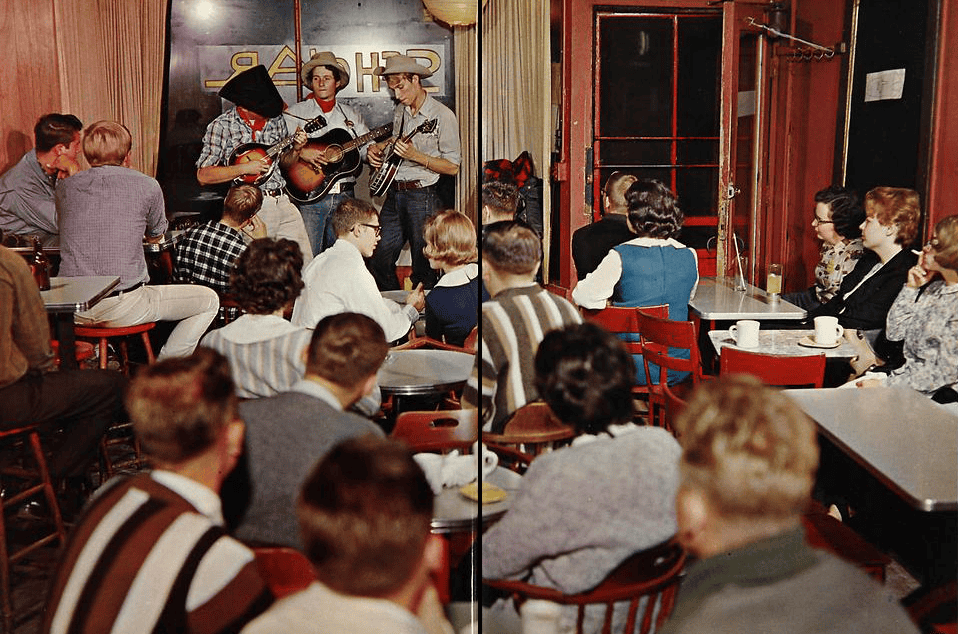
As a capsule of the ‘players’ in the complicated ‘theater’ of the Folk Revival and roots based commercial music such as Country Music and Blues, LSR clearly captured the content and drama of the Folk Revival. Editors Pankake and Nelson themselves participated as actors in the contentious Folk Revival theater. All of the Folk Revival was a massive, complicated stage. LSR made clear that the drama of the Folk Revival was not merely a poor player that strutted and fretted its hour upon the folk music stage.
LSR and the Folk Revival was full of sound and fury signifying everything, signifying life itself. LSR lives and reaches far beyond the grave. LSR is dead. Long live LSR!