Jordi Guasch
Barcelona, Spain
Editor’s Introduction – James Akenson
Jodi Guasch from Barcelona Spain continues to have unusual and intriguing perceptions and thoughts about Country Music. We have shared his writings about Country Music and reincarnation, Country Music and the Himalayas, and even Country Music pioneer Charlie Poole. Now Jordi Guasch shares thoughts about Country Music in the Pacific Ocean including Rapa Nui…formerly known as Easter Island and Hawaii.
I appreciate Guasch’s sense of history as he references Jimmie Rodgers, “The Father of Country Music.” Rodgers’ Sister-In-Law, Elsie Williamson McWilliams, helped write Everybody Does It In Hawaii. She, and the entire family, worried about the ability of Jimmie to hold a steady job and support her sister Carrie Williamson Rodgers. I had the privilege of interviewing Miss Elsie in her living room in Meridian, Mississippi. I always remember her talking about Everybody Does it in Hawaii. There are other Country Music artist who mention Hawaii such as Hank Snow, Old Dominion, and Chris Janson. There are several Hawaiian Country Music artists such as Ernie Cruz, Joe Dawn, and Jesus Q. Castro.
I also appreciate how Jordi Guasch discovers songs and connections I’ve never known. Guasch deals with a Kris Kristofferson song and album, Easter Island. I never knew it existed. It’s a ‘fur piece’ from Sunday Mornin’ Coming Down, Why Me Lord, or even Me and Bobby McGee. And I’m supposed to know a fair amount about Country Music. Guasch also deals with Hawaiian history during the era of King Kamehameha III. I also appreciate that Guasch links Willie Nelson and even Randy Travis into the discussion.
Enjoy reading Jordi Guasch’s thoughts about the Pacific Ocean’s Hawaiian Islands and Rapa Nui (Easter Island).
I’ve covered lots of different physical and cultural geography in my Country Music travels and writings. I’ve focused on North Carolina’s Charlie Poole, the Himalayas ,“The Roof Of The World,” and even dealt with Country Music and Reincarnation. The Pacific Ocean and Country Music deserves some attention.
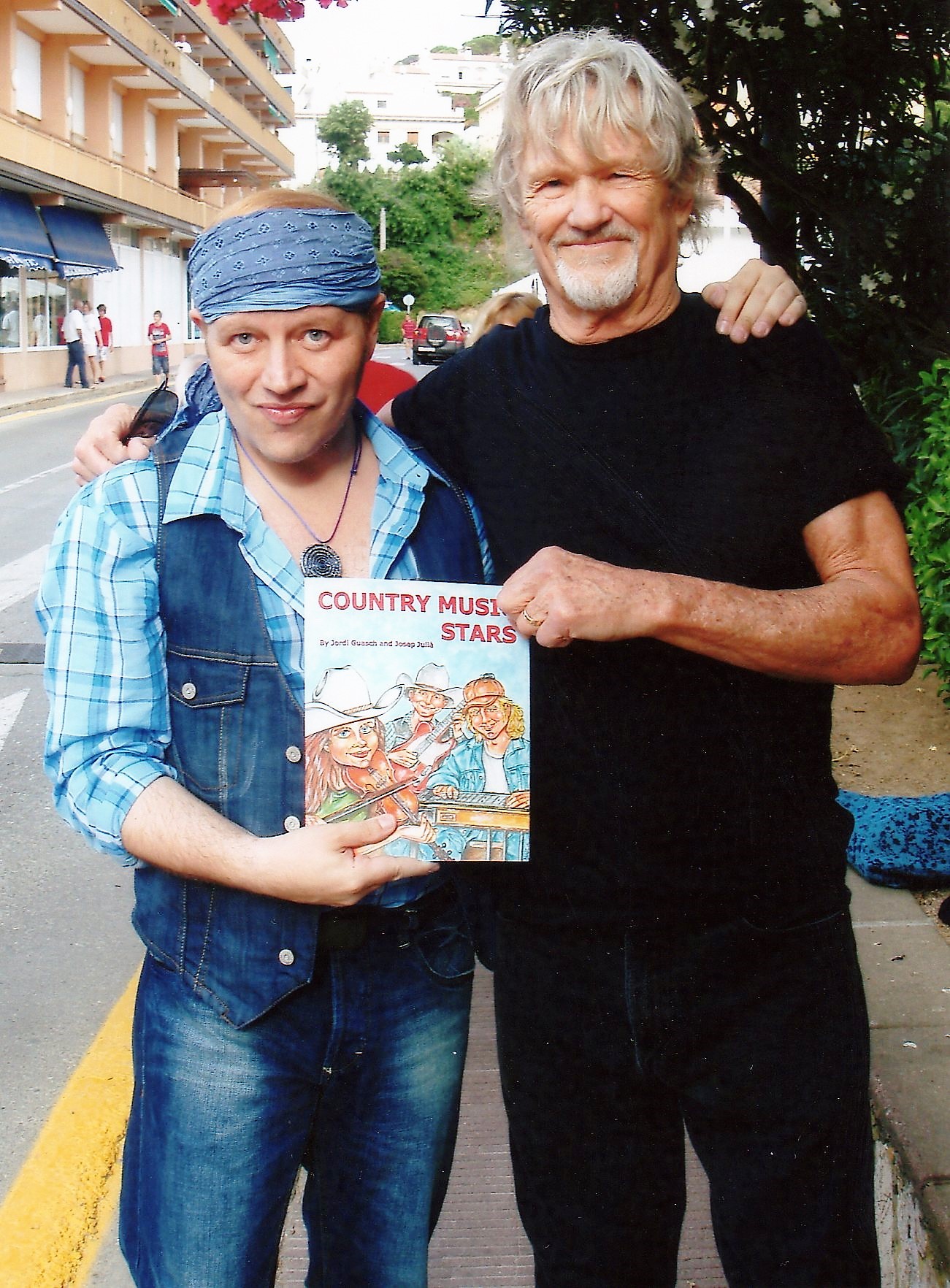
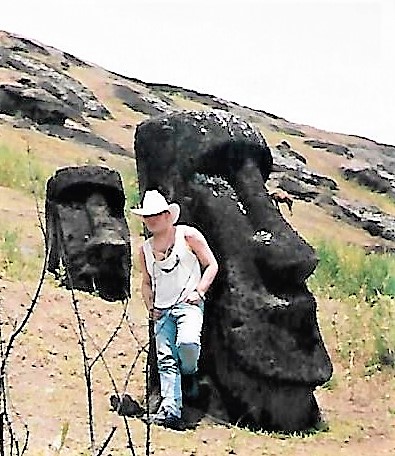
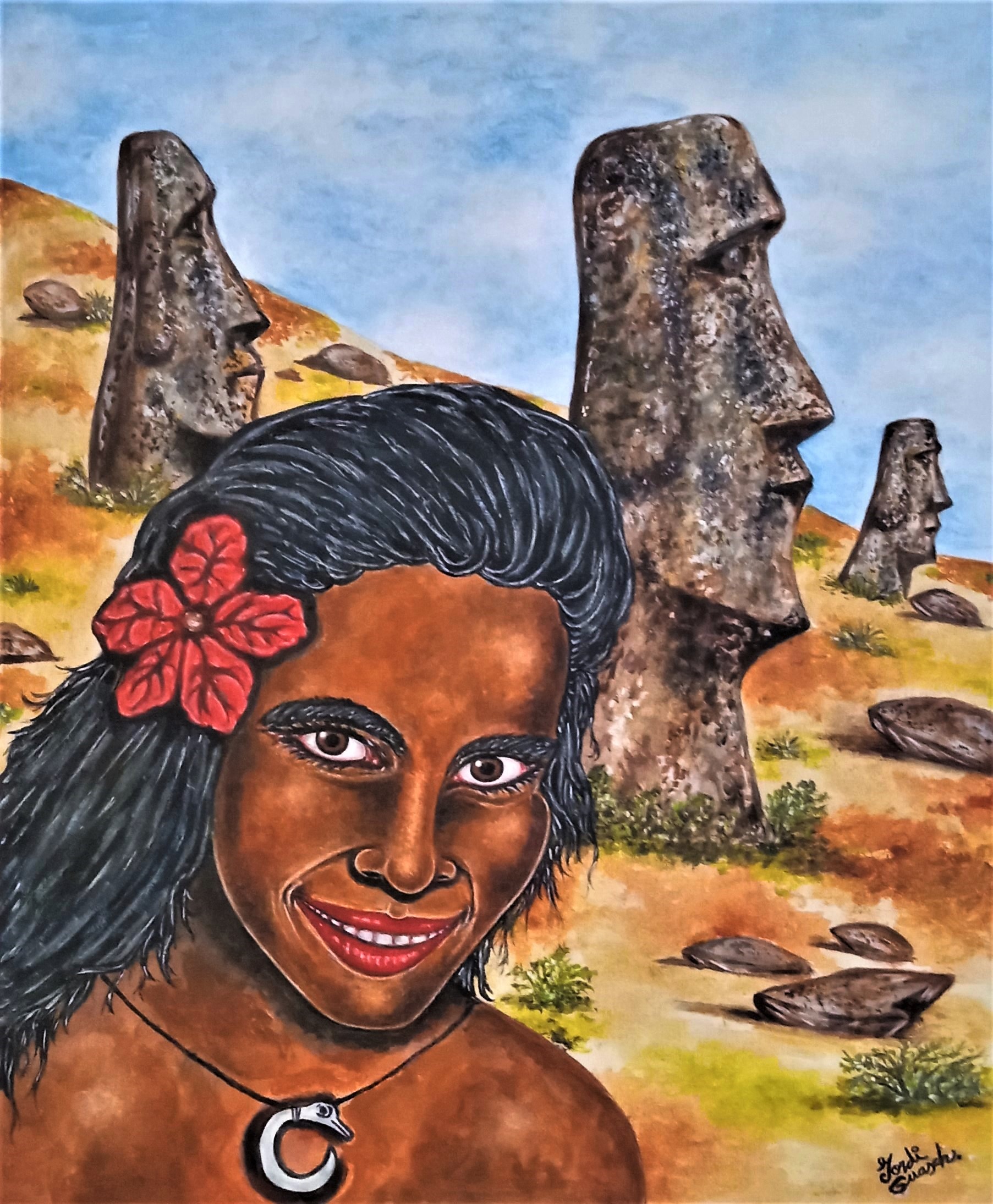
I am not aware of any singers, musicians, or bands on Easter Island (now known as Rapa Nui). Kris Kristofferson’s song and album Easter Island (released in 1978) directly references the real-world Easter Island (Rapa Nui) and its famous monolithic statues. The lyrics explicitly describe the island’s iconic stone figures (“staring in silence from sockets of stone“) and the quarries where the statues were carved (“How many more might have come from that mountain?“). Kristofferson uses the remote, mysterious history of Rapa Nui as a metaphorical backdrop to reflect on human folly, lost civilizations, and grand illusions.
When Jimmie Rodgers recorded Everybody Does It in Hawaii in August 1929, this track featured tropical rhythms, yodeling mixed with Hawaiian-style phrasing, and accompaniment by steel guitars and ukuleles. Is it possible that there is a song from the Easter Island that includes a yodel similar to Jimmie Rodgers’ Blue Yodels? Yes!
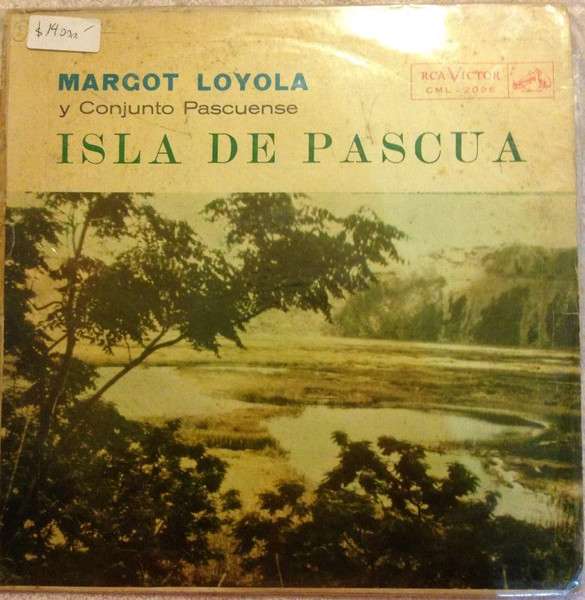 And I discovered that in 2003 when I traveled to Rapu Nui (Easter Island) and bought a CD by Margot Loyola y Conjunto Pascuence with a song entitled Sau Sau. I discussed this curious matter, including the song, on my first edited book Corrido del güero errante and one of my CorazónCountry podcast. .
Sau Sau is a dance and song from Samoa which has been practiced in the Easter Island for the last years and this name is applied to any feast where dancing takes place. It starts with the couple dancing around each other, then the man holds the woman with his hand to allow her spin around herself.
Then the couple separates from each other and start a series of movements and a slanting walk starting at one side and crossing to the other. The dance goes on with a variety of movements and slowly the rhythm of the music begins to accelerate and the dance turns into a whirlwind mingled with shouts of pleasure.
Well, really, we can’t imagine this, for example, in one two step or square dance. But, with a bit of imagination, maybe we could imagine Jimmie Rodgers as a minor Rapa Nui deity or celebrity with the Samoans on Easter Island dancing and singing to Rodgers’ Everybody Does It In Hawaii.
Obviously, Sau Sau it’s not a country music song. Many Hawaiian songs feature falsetto. In Hawaiian-style falsetto – called ka leo kiʻekiʻe – the singer, usually male, emphasizes the break between registers. Sometimes the singer exaggerates the break through repetition, as a yodel.
 As with other aspects of Hawaiian music, falsetto developed from a combination of sources, including pre-European Hawaiian chanting, early Christian hymn singing and the songs and yodeling of immigrant cowboys, called “paniolos.”
During the Kamehameha Reign in the 1800s cowboys were brought from Mexico to teach Hawaiians how to care for cattle. To safely handle and rope the destructive herds, King Kamehameha III brought Mexican and Californian vaqueros to the islands in 1832. The vaqueros brought guitars, riding gear, and camp songs featuring high-pitched calls and yodels.
Native Hawaiians adapted the vocal breaks and high falsetto shifts, merging them with traditional vocal ornaments to form a unique local cowboy and folk music tradition. By the late 1920s, American country music pioneers like Jimmie Rodgers actively cross-pollinated with Hawaiian musicians, blending mainland blue yodels with Hawaiian steel guitar tracks.
Local Hawaiian songwriters later composed island-style cowboy songs that fully merged mainland country yodeling tropes with native Hawaiian falsetto performance. as Sol K. Bright’s Hawaiian Cowboy helped make him a popular artist. Hawaiian Cowboy contains ‘koana’ or hidden meaning. Hawiian Cowboy contains lots of double entendre.
Jimmie Rodgers incorporated Hawaiian instruments—most notably the steel guitar and ukulele—into his recordings and actively collaborated with Native Hawaiian musicians like Joseph Kaipo and groups like Lani McIntire’s band, blending Pacific sounds into his pioneering Blue Yodel style.
Rodgers’ influence may have reached Easter Island, and consequently, it would be reasonable to think that, in a way, it is present in the song Sau Sau from Margot Loyola y Conjunto Pascuence.
About “paniolo”, for example, we can listen to the wonderful country covers of the song Paniolo Country (Marcus Shutte, Jr.) by Melveen´s cd´s or Randy Travis Wind in The Wire album.
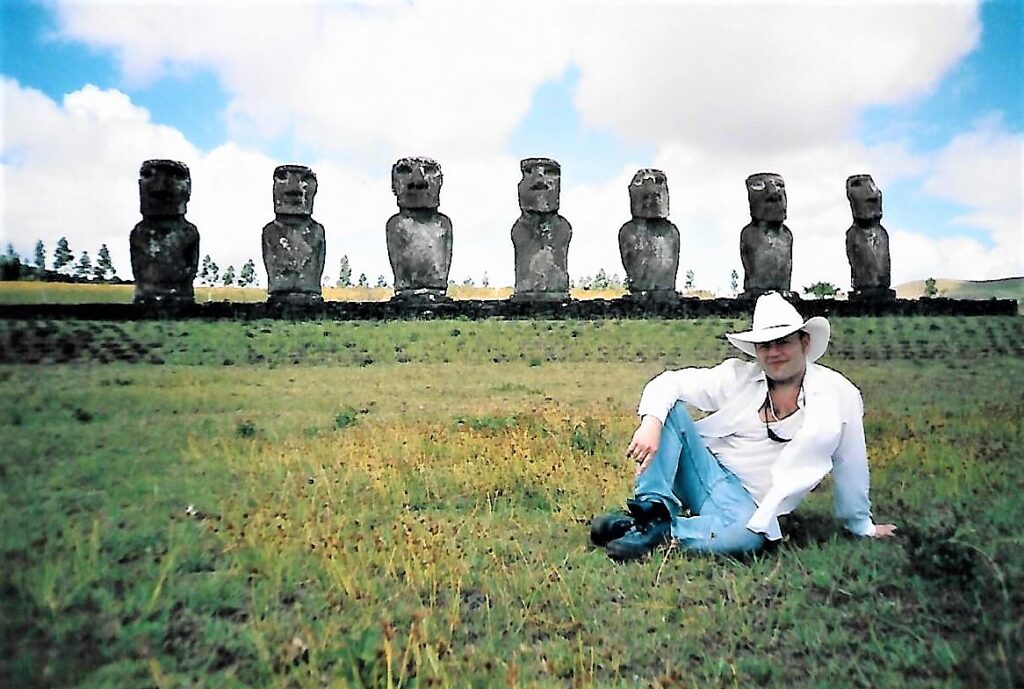
In 2003, I visited Rapu Nui. My guide stopped at a service station to change a vehicle tire. Emmylou Harris’ was playing from a radio program! The cultural festival, Tapati Rapa Nui, celebrates old island traditions such as music, folk dances, and numerous other activities and competitions.
I noticed an eight-string ukulele that was somewhat triangular in shape like the island itself. As Adam Komorowski said on the 4 CD Set With My Little Ukulele In My Hand, there´s a number of popular stories about how the instrument was so named. The most popular account credits Portuguese Joao Fernandes as the man responsible.
He arrived in Honolulu on August 23, 1879 along with other immigrants from Madeira. Upon arrival Joao started performing folk songs from his native home, playing a braguinha in joyful celebration of their arrival. The locals were most impressed with the lightning speed of his finger work on the instrument and called it “ukulele” in acknowledgement of his style of playing.
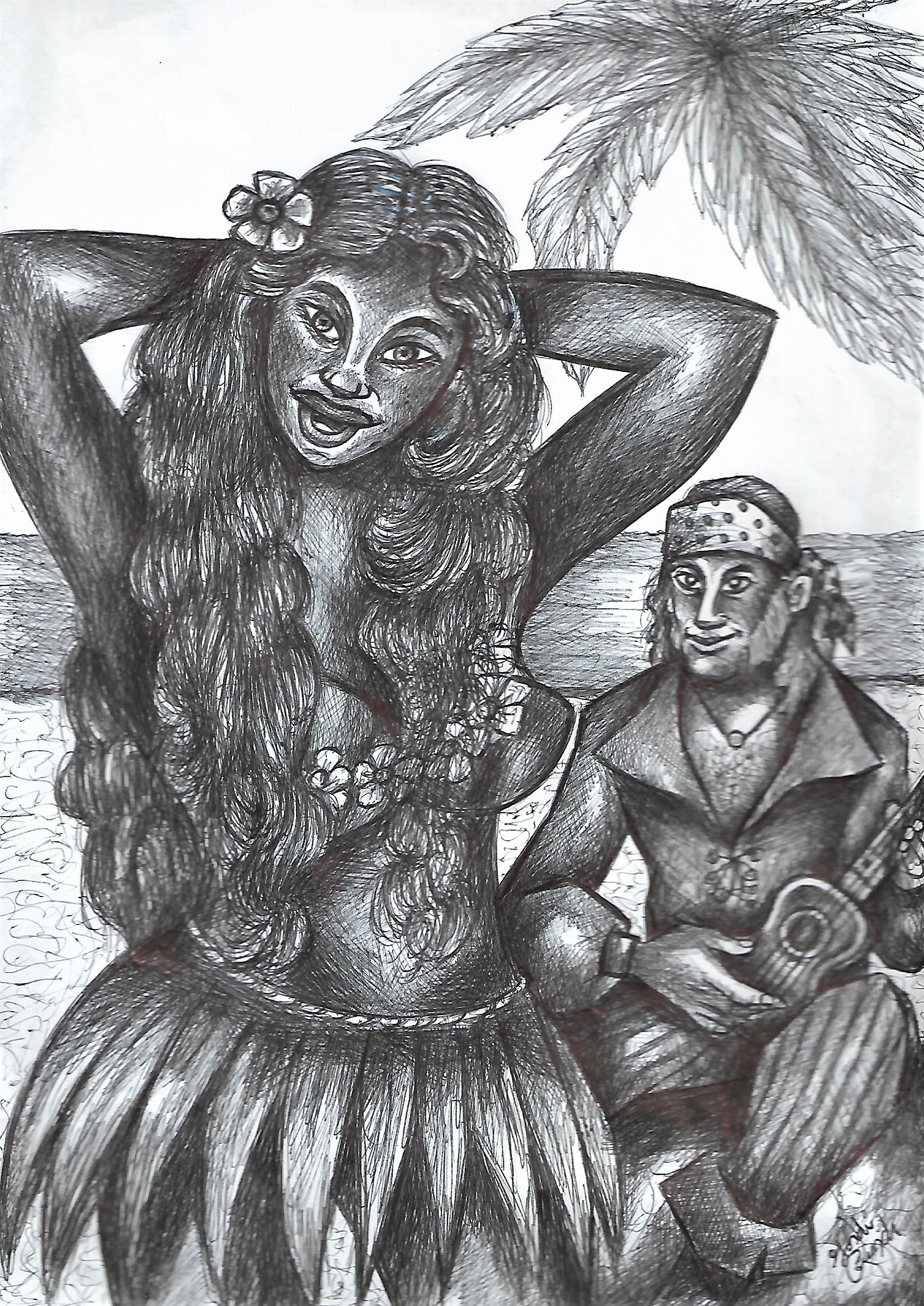
There are other stories about the Ukulele name. The little four-string Madeiran guitar called “machete” is a small, four-stringed Portuguese chordophone that served as the direct ancestor to the modern Hawaiian ukulele. Lil Rev and Deb Porter wrote in the Old-Time Herald magazine in Fall 2004 of the cultural transmission of the Ukulele.
As transient tent shows and vaudeville troops proliferated throughout the deep South and Midwest of the United States, musicians like ukulele wizard King Bennie Nawahi and steel guitar master Sol Hoopi, left an indelible mark on their country music counterparts.
We can only assume that many country musicians must have been touched by the performances of the traveling music/medicine/minstrel shows. Recordings show that country music bands, singers and musicians often displayed a remarkable affinity for the ukulele´s historical Hawaiian styling.
In my article on Country Music and Reincarnation I mentioned Willie Nelson’s relationship with Hawaii. Willie Nelson also mentions Atlantis in his book The Tao of Willie. He wrote about the theory that the warriors of Atlantis went to Samoa (where their descendants include some really big dudes). Willie also said that the fishermen of Atlantis sailed to the Aleutian Islands, Alaska, and the Northwest.
There were the navigators and doctors, who came to Hawaii and founded a culture that has lasted thousand of years. However, the supposed origin of an “Atlantis” in the Pacific Ocean is popularly known as Mu/Lemuria.
The lost continent of Mu was popularized in the 19th and early 20th centuries by writers like Augustus Le Plongeon and James Churchward, who claimed Mu sat in the Pacific Ocean and stretched from Hawaii to Easter Island before sinking beneath the waves.
Hiva (or Hawaiki), appears in Polynesian oral traditions as an ancestral homeland, rather than a “lost sunken continent.” Western theories from the 19th and 20th centuries—such as the myth of Mu or Lemuria and across various Polynesian cultures (such as Māori, Rapa Nui, and the Marquesas), Hawaiki or Hiva is remembered as the sacred place of origin and where spirits return after death.
When I was in Rapa Nui, I had some country music Cds with me. I gave two of them to a local who owned a bar where Don Williams songs were being played. I like to think that maybe my musical contribution helped to spread Country Music and that it might one day influence local groups, musicians, and singers.