James E. Akenson
Tennessee Tech University (Retired)
Cookeville, Tennessee, U.S.A
Here is a question to consider. What does the 1960 Quarterback for Southwest High School in Minneapolis, Minnesota have to do with Country Music history? And…how does it show that I don’t know as much about Country Music history as I should?
Well, since you ask, I recently attended my Southwest High School (SWHS) Class of 1961 reunion. No we are not getting older. I may have been nothing in high school but I didn’t hate it. I did have some friends. And…thanks to previous reunions and Facebook, I’ve expanded my social acceptability index.
In fact, our class president James Allen Barry is a Country Music fan and has even attended the International Country Music Conference in which I’m involved. Why not attend the 65th class reunion? We probably won’t see each other again in our lifetimes.
So what does my Class of 1961 reunion have to do with Country Music history? Well, I talked to lots of people. Most significantly, I talked to Dick Purrier who was the 1960 Southwest high school quarterback and learned about The Flame Café.
I don’t know that Dick Purrier and I ever talked while at SWHS in grades 7-12. Turns out, though, that Dick Purrier is a Country Music fan. There was the usual “My parents played Country Music records and listened to it on the radio” remarks that went with Dick Purrier’s history. My parents only cared about hymns sung at First Baptist Church.
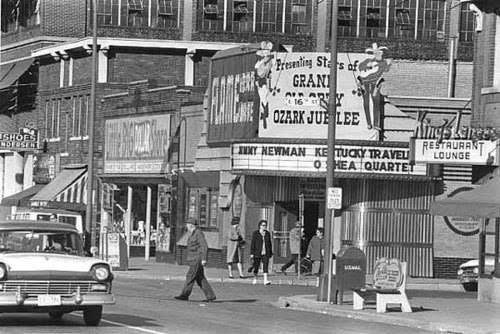
I didn’t know anything about the Flame Café in downtown Minneapolis. It was there during my years through undergraduate and graduate school. Once he was ‘legal’ at 21 Dick Purrier went to the Flame Café, drank 50 cent beers, and listened to Country Music.
Dick Purrier didn’t just hear some obscure local Country Music wannabees. Purrier heard major Country Music artists that are now in the Country Music Hall of Fame and Museum. For a 50 cent beer no less, Dick Purrier remembers seeing Hank Snow, Stonewall Jackson, and Lefty Frizzell.
Take a look at the Dick Purrier video. Purrier’s wife remembers a date when they saw George Hamilton IV. The Flame Cafe spreadsheet confirms that George Hamilton IV did appear multiple times from 1965 to 1970. Dick Purrier’s memory is accurate. Only Lefty Frizzell doesn’t show up in the Flame Cafe Spreadsheet
The Flame Café became a Country Music venue after having been a jazz oriented venue. From 1956 through 1971 the Flame Café hosted a who’s who of Country Music artists. The Flame Café spreadsheet lists lots of other artists that played the Flame Café.
Seems like Tex Ritter, Jerry Reed, Ernest Tubb, George Jones, Marvin Rainwater, Carl Perkins, The Louvin Brothers, Wanda Jackson, Billy Grammar, and Webb Pierce makes quite a list. Like the Ginzu Knife commercial… “But wait there’s more!”….LOTS more. I don’t want to give you cognitive overload. The spreadsheet might not be 100% complete and updates are encouraged.
Most important in Dick Purrier mind is Texas Bill Strength. Right on, Dick! All the evidence points to Texas Bill Strength as an important cog in the Flame Café Country Music machine…or Country Music CULTURE would be a more sophisticated terminology.
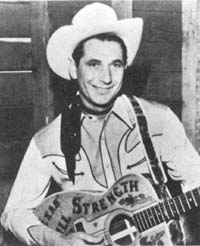
The Flame Café spreadsheet lists Texas Bill Strength as TBS on 16 May 1956 with numerous appearances ending 31 October 1971. Even our Ai friend verifies the significance of TBS.
Known as “The Kentucky Gentleman,” Bill Strength moved to Minneapolis from the South with a blessing from Elvis Presley and Carl Perkins to “show the Yankees what country music was all about”.
While acting as a premier DJ for local radio stations like KEYD and booking Nashville legends at the Flame Cafe, Strength utilized Kay Bank Studios to record regional country singles and promotional acetate tracks that kept the Upper Midwest hooked on traditional honky-tonk sound.
Note the southern connection and belief in bringing Country Music culture to Yankees. Forget about the World War 1 Army Alpha Tests that showed Southern whites scored lower than Northern whites. Northerners lacked Country Music culture pure and simple.
No doubt Northerners would score low on the Basic Assessment of Country Music Knowledge…if one were designed and administered. I wish the American Psychological Association had done so. It would empirically prove Yankee inferiority.
My Swedish ancestors would particularly expect Norwegian inferiority. My friend Dave Sichak of hillbilly-music.com further verifies the importance of TBS with a lengthy item that illustrates the scope of TBS’ career.
Any surprises? Yes. There were powerful columnists for the Minneapolis newspapers who mentioned The Flame Cafe and Country Music artists. Cedric Adams was ‘Big Stuff’ in the Upper Mid-West and even appeared on Edward R. Morrow’s program on CBS.
Will Jones also had a big following. I read both columnists from time to time. Totally missed the Flame Café items. “Twin City Musical Highlights…through 1974” indicates:
In his February 1, 1956, column in the Minneapolis Star, Cedric Adams wrote: Western music has spread out a good deal in the last few years and now it takes over a Minneapolis theater café. The Flame at Sixteenth and Nicollet experimented with a western band for a couple of nights and found the customers liked it, so now makes it regular policy.
Johnny T and the Tennesseans, one of the top country and western bands, moves into the place tonight and square dancing and other hoppity steps are the rule. The Flame goes whole hog on the theme, using the Dakota Roundup troupe in the lounge, with special Wednesday night appearances by Texas Bill Strength, the hillbilly singer. Any square dance group, incidentally, can bring its own caller along, so you may hear some verbal improvisations.
Will Jones was super cool and hip. Jones also mention the Flame Café in his column.
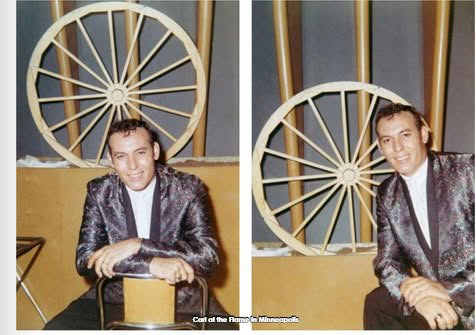
On February 2, 1956, Will Jones also noted the Western trend: Western music has been a feature of the front bar for a number of years, but it didn’t invade the big back room until last week. The management tried out Johnny T. and his Tennesseans, liked them, and hired them as an every-night attraction. The Dakota Roundup continues in the front bar, with Texas Bill Strength as a regular Wednesday night guest. “The Flame has become House of Western Swing – Newest Musical Fad!” To celebrate the new musical policy, the Main room was redecorated with wagon wheels and the banquettes were covered with cowhide.
Bigger surprise? Dave Dudley. I had no idea that Dave Dudley performed at the Flame Café and acted as MC beginning on March 31, 1958. How about MCing for, or appearing with, the likes of Red Sovine, Wanda Jackson, George Morgan, and George Jones to name a few? Biggest surprise…in 1963 Dave Dudley recorded his career defining hit Six Days on The Road in Minneapolis at Kay Bank Studios. Knock me over with a feather!
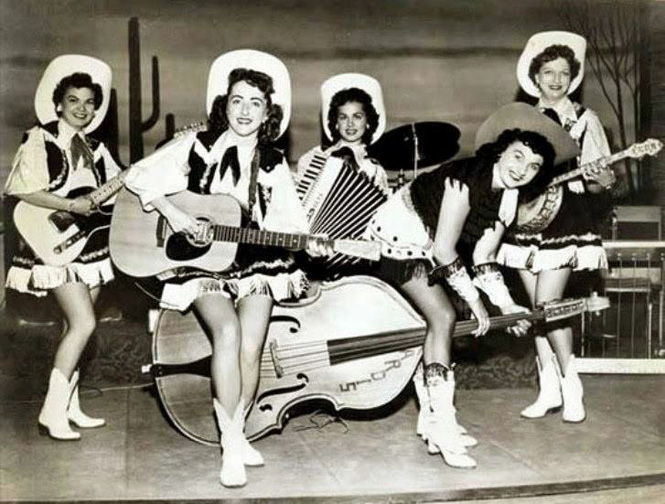
Besides big name acts there were local and lesser known acts appearing at the Flame Café. From day one on 23 February 1956 Jimmy Wells, Ardis Wells, and Princess Jo Ann appeared. On 28 August 1971 The Stinson Brothers appeared. Ardis Wells and Her Rhythm Ranch Girls “America’s Foremost All Girl Western Band” played an important role at the Flame Café. Our Ai friend says.
It served as the primary home base for iconic regional acts, including Ardis Wells and her Rhythm Ranch Girls and The North Sisters (Jan & Patti), who anchored the Twin Cities country scene from the late 1950s onward. Other notable pickers and steel guitarists like Sherwin Linton also frequently graced its stages.
Likewise, there were memories made by musicians such as Richard Bass who reported in the Steel Guitar Forum of his Flame Café memories.
In 1969 or 1970 I was playing lead for Dave Dudley who at one time had the band at the Flame. Well to make a long story short I left Dave and worked the Flame for about Two Months January and Feb. I worked with Chill Hillman in the back room during the week and once in a while with Eddie Lee at the front bar.
The only band member I remember was Micky Marlowe, a beautiful girl who sang her a$$ off. I stayed at a hotel just two blocks from the club, and there were a couple of nights I took a cab to the hotel because it got to be about 100 degrees below zero. Coldest weather I’ve ever seen. The Flame was a great place to work and I met a lot of great musicians there.
B.Cole remembered “I worked there with Porkey Witherell the Yodeling hobo for about 6 months as the house band in the back room we played sometimes in the front on the back bar. We back people like Justin Tubb, Wanda Jackson, Tex Ritter and I can’t remember some of the other ones.
But it sure was a great place.” In short, great names appeared at the Flame Café, but lesser known musicians also helped give the Flame Café and Country Music culture its character.
So then, the Southwest High School Reunion for the class of 1961 turned out to have an unexpected Country Music benefit. And…I’m thinking that the Flame Café is a random sample….give me some leeway here stat and research design folks….of many other Flame Cafes throughout the Midwest, Northeast, and West Coast.
Maybe the Flame Café…and others like it… is a Palomino Club on a lesser known scale. Somewhere a researcher is..or should be…constructing a mega data base using the Flame Cafe, the Palomino Club, and dozens of other venues.
Country Music growth beyond its southern cultural hearth could be analyzed with a variety of statistical tools. Anyone for Regression Analysis? Given the age of the Southwest Class of 1961 it might be best to structure a “We’re now 85” event instead of banking on a 70th reunion. I hit the Country Music jackpot at the 65th reunion thanks to a conversation with Dick Purrier.
Even an 85th birthday get together for Class of 1961 might provide me with another unexpected Country Music prize. I’ll just need to talk to more classmates. There may be another Flame Café worthy gem waiting to be discovered. Got to keep the Country Music Flame burning!