Jordi Guasch
Barcelona, Spain
Editor’s Introduction – James E Akenson
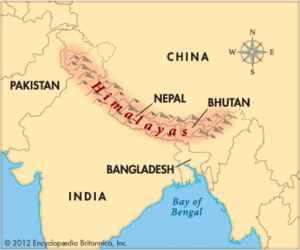
Our friend Jordi Guasch in Barcelona, Spain continues to delve into intriguing aspects of Country Music. This time he is dealing with Asia and particularly the Himalayas and countries like Nepal and India. We don’t think of the Himalayas and particularly Nepal like we do with Nashville as Music City. We may realize that Nepal is known as “The Roof Of The World” given it’s great mountain peaks such as Mt. Everest. We probably need a map to show the range of the Himalayas and it’s position in Asia.
 I’m particularly interested in Jordi Guasch’s article on Country Music in the Himalayas. A while back I corresponded with a person in Bhutan teaching Bluegrass, Old Timey, and Irish Music. He indicated that I’m currently teaching young men and women here music in the hopes of them finding employment as music teachers in local schools. I’m originally from Australia and have been here for almost three years teaching banjo, fiddle, mandolin, guitar and bass. I had hoped to write an article about his experiences for International Country Music Dot Net. It didn’t completely work out and the person eventually left Bhutan. Bet you didn’t know the capital is Thimphu. Yes. Jordi Guasch also travelled in Bhutan. But at least now we have Jordi Guasch sharing his experiences in the remarkable region of Asia.
One final thing. Yes. I’m interest in Artificial Intelligence (Ai) despite my concerns about job loss and harm to the environment. I had to ask chatgpt.com “Does Country Music take place in the Himalayan countries of Asia?” Looks like Jordi Guasch is correct. Ai replied. “In countries like Nepal, Bhutan and India (especially in northern hill regions), country music shows up in a few specific contexts.” Included are:
1. Urban and expatriate scenes,
Cities such as Kathmandu and Shimla have small communities of musicians who play Western genres—including country—in bars, festivals, and tourist venues.
2. Tourism-driven performance.
Because many travellers to the Himalayas come from Europe and North America, local musicians sometimes include country songs in their repertoire. You might hear covers of Take Me Home, Country Roads or Ring of Fire in trekking hubs.
3. Fusion and parallel traditions.
While not “country music” per se, Himalayan folk traditions often share structural similarities with country, acoustic instrumentation, narrative storytelling. Themes of rural life, migration, longing in parts of northern India (e.g., Himachal Pradesh, Uttarakhand), local folk music sometimes closer to Appalachian or country traditions than to urban Indian pop.
Ai also shared that the Nitty Gritty Dirt Band visited Kathmandu as part of a cultural music exchange.
So, Ai and Jordi Guasch think along similar lines. And…Jordi Guasch has actually been to Nepal, Bhutan, and India. So, if the The Roof of the World and Country Music interest you this piece by Jordi Guasch is for you! Jordi’s world is an interesting world.
Country Music to the Himalayas – Jordi Guasch
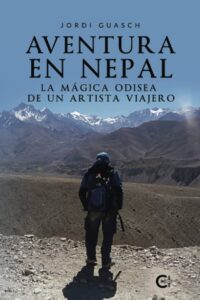 Is it possible to associate Country Music with Nepal folk music? Of course, and I’m going to prove it! And some of what I will explain can be read in my book Aventura en Nepal :The Magical Odyssey of Traveling Artist (Caligrama Editorial).
 In 2009, The Mountain Music Project published a CD and a DVD about a project of two traditional Country Music musicians travelling from the hills of Virginia to the villages of rural Nepal. They discovered the extraordinary connections between Appalachian and Himalayan folk music. In 2006, The Mountain Music Project traveled to Nepal in search of folk musicians of the Gandharba caste. The Gandharbas were the “singing messengers” of the rural Himalayas.
They‘d walk from village to village, bringing the news and stories. There was a quality to their music, played on homemade instruments, particularly the fiddle-like Sarangi, similar to old-time Appalachian mountain music from back home in the US. They visited Gandharba villages and were amazed at the similarities that reached far beyond just the music. Back in the capitol city of Kathmandu, they recorded several Nepal and American country songs, and added tracks from some renowned Bluegrass and Old Time artists back home. It was a jam session spanning continents and cultures.
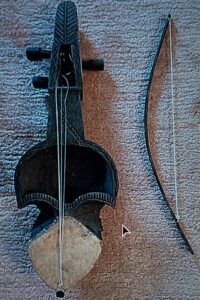 The Nepali sarangi is carved from a single piece of wood of the Kirra tree, with a goatskin stretched across it to support the bridge. It has four strings like the western fiddle. Traditionally, Nepalis made strings from animal gut as folks did in the Appalachians, but now inexpensive and readily available materials are used, the most common being badminton racquet mesh and telephone wire. Pine sap is collected from local trees to rosin the bow.
The sarangi is tuned sol-do-do-sol, similar to some Appalachian cross-tunings. The middle two strings are tuned in unison to create a droning sound. It is held upright and instead of pressing down on the strings with the fingertips, the fingernails are touched against the side of the strings to change the pitch.
Country artist Tim O ́Brien, also wrote on the Mountain Music Project CD:
This recording by the Mountain Music Project illuminates the parallel experiences of musicians from Virginia and Nepal. We hear these fiddlers and flute players, banjo pickers and drummers playing in new urban environs as well as in their native chicken yards.
To so many, they represent a constant in the face of changing times and lifestyles. These honorable troubadours keep the old songs and stories alive, reminding us all where we come from.
Mountain Music Project included famous American songs like Cluck Old Hen, My Home is Across the Blue Ridge Mountains, Little Liza Jane and Oh! Susannah (in Nepali language!). The CD included Nepali traditional folk songs like Resham Firiri and Deri Phul Paareko.
American and Nepali musicians included Buddhiman Gandharba (sarangi, vocals), Tara Linhardt (guitar, mandolin), Danny Knicely (guitar, mandolin, fiddle, vocals), Manoj Gandharba (vocals, mabdala), Tony Trischka (bluegrass banjo), Curtis Burch (dobro), Paul Brown (old-time banjo), and Tim O ́Brien (vocals, fiddle, mandola).
In October and November 2014, I spent two intense months adventuring through Nepal alone and improvising as I went along. I was drifting along like the cowboy of Bob Nolan’s Tumbling Tumbleweeds. My book Black Lily/Pétalos de Muerte (Caligrama Editorial) includes these events.
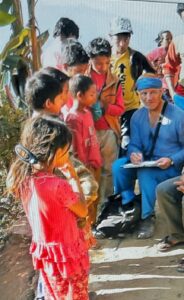
In a certain mountain village, I happened to discover (or by karma…) a couple of Gandharvas. I started drawing them and, as always, giving the portraits away. While I was doing it, a person invited me to their house and played with his sarangi some Nepali folk tunes. I played my harmonica a little, including my usual interpretation of Oh! Susannah.
When I climbed a hill to meet another sarangi player, he played a melody for me that, if sung in English, would sound exactly like an old-time Appalachian song. I was astonished! It reminded me somewhat of the kind of Appalachian old-time songs in the style of Dock Boggs, Clarence “Tom” Ashley, or Buell Kazee.
Jews harp is another instrument in Nepal that I also bought in Kathmandu withith Buddha, or gods as Shiva.
In the wonderful book Wayfaring Strangers (The Musical Voyage from Scotland and Ulster to Appalachia), by Fiona Ritchie and Doug Orr, they said that the jaw harp (often called the “Jew’s harp”) became a popular companion of the Scots-Irish settlers on the trail southward along the Great Wagon Road into the southern Appalachians.
It went by many names dating to the early seventeenth century , including the “trump” in Scotland and “Jew’s harp” in England. Wagoners of the Wagon Road were often natural storytellers, and some emerged as minstrels of this road, especially those who carried a fiddle or banjo.
The pocket-sized jaw harp was an especially popular musical accessory, so much so that stores along the route, beginning in Philadelphia, sold them in large quantities along with other provisions for the expedition. Colonial governors were even known to supply jaw harps as gifts to pioneers who benefited the colonies by carving out new settlements.
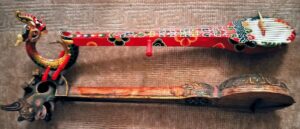
In Nepal I also bought an instrument, similar to the banjo called Tunguna, or Tungna. Even on a CD I bought titled Kutumba (Ever lasting Nepali Folk Instrumental), there is a song called Banjo Khet ma. Country Music and country-blues artists exist in Nepal, though it is a niche genre. Artists like Prakash Slim (Ram Prakash Pokharel) are recognized for playing Country Blues, using resonator guitars, and performing original songs with a vintage country feel.</span<
It is evident that the banjo it arrived in America with slaves from West Africa, but the origin of this type of instrument is surely in Asia, as there are similar ones, both in form and sound, in different Asian cultures. Several ancient Egyptian tombs in the Theban Necropolis feature paintings of a long-necked stringed instrument that looks remarkably like a banjo.
These instruments are believed to have originated in the Near East and were brought to Egypt. It is widely accepted by musicologists and historians that the banjo’s ancestors were brought to West Africa from North Africa and the Middle East, facilitated by the spread of Islam and trade. The instrument was later adapted significantly by West Africans before being brought to the Americas.
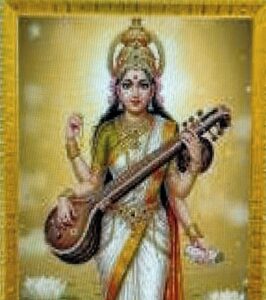
Here is a banjo that I photographed during my first trip to India in 2007. It was in a small puppet museum in Udaipur. Let’s look at the characters drawn on the drum, as they look clearly Indian. “I explain them in my book Camino de Varanasi (Road to Varanasi ). The name of the instrument played by the Hindu goddess Saraswati is the Veena (or Saraswati Veena). But, as I said before, there are instruments similar to the banjo even in the most distant places in Asia, such as Mongolia or Japan.
There ́is a 2008 CD called Blue Grass Kirtan, by Jon Seskevich and AC Bushnell. In the CD text we read:
Blue Grass Kirtan is mantra chanting with kicking bluegrass music! Many people know this banjo, fiddle, guitar and bass musical genre as Bluegrass although it is more accurate to call it traditional old-time Appalachian music. The role and purpose of a mantra is to protect the mind. Most religious traditions recognize this cognitive-spiritual tool. Repetitions of the particularly healing sacred syllables used in Blue Grass Kirtan quiet the mind and open the heart. Unless otherwise noted the words in Blue Grass Kirtan are from the Hindu tradition. Sacred phrases of the Buddhist tradition and of the Christian faith are also used. Some of these melodies were originally instrumentals, and some had traditional lyrics.”
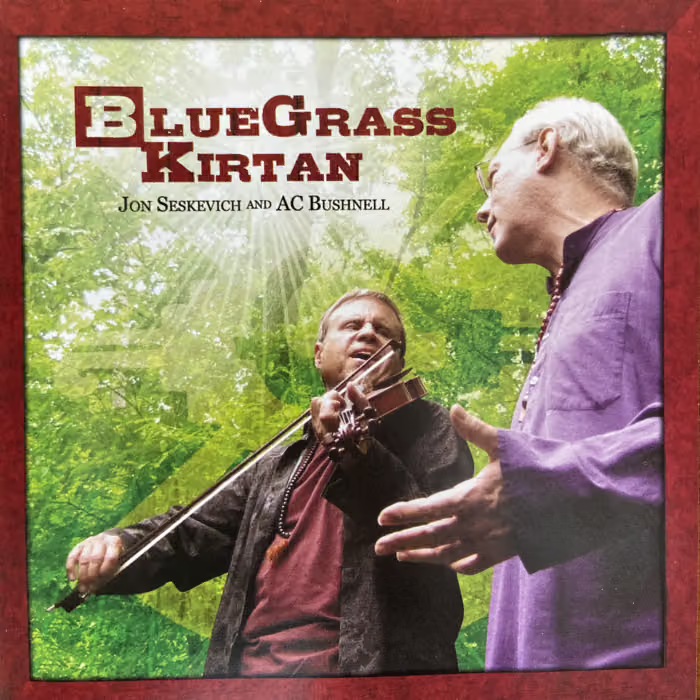 The performers on Blue Grass Kirtan are familiar with both Hindu and Buddhist spirituality. Tim Wells is a Bluegrass singer with experience chanting in India. AC Bushellsay first met singer Ambika Cooper in India in October 2004. She joins Bushnell to sing the first Bluegrass Hanuman Chalisa. The Hanuman Chalisa is a 16th-century, 40-verse devotional hymn composed by Saint Tulsidas in Awadhi language, dedicated to Lord Hanuman. It praises Hanuman’s strength, wisdom, and devotion to Lord Ram. It serves as a prayer to overcome fears, obstacles, and negative energies, while promoting inner peace, courage, and spiritual growth.
Jon Seskevich is a lifelong student of meditation Bhakti Yoga and practitioner of mind-body medicine, nursing and healing. He has been an RN, teacher, and musician and has been devoted to helping people navigate the sufferings and joys of life, right up to their last breath. A.C. Bushnell is a Chapel Hill North Carolina-based Bluegrass and old-time musician known primarily as a fiddle player, singer, and songwriter. Often called the “Jimi Hendrix of the Fiddle” for his energetic improvisational style, Bushnell has been a fixture in the NC roots music scene since the early 1970s./span>
The CD includes songs as Krishna And Ram, Shiva At The Falls of Richmond (Remix), Jesus Before Breakfast, Buddha ́s Square Dance (based on the traditional tune Seneca Square Dance that was originally recorded by Fiddlin’ ́Sam Long of the Ozarks in 1925.
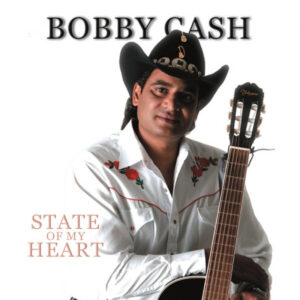 A small but notable Country Music scene exists in India, featuring artists who blend traditional storytelling with Indian influences. Bobby Cash is widely recognized as India’s first country music star, based in Dehradun, while Bengaluru-based Sheridan Brass and others are keeping the genre alive. The Indian music charts are a reflection of the nation’s diverse musical tastes.
Top music artists in India often span various genres, including pop, Bollywood, classical, and more. The inclusion of Country Music artists in these charts represents a growing appreciation for this genre. Some of the top music artists in India have managed to blend country influences into their music. Artists like Mame Khan and Hariharan have also earned their spots, bringing something unique to the table.
While travelling through the Trongsa area in Bhutan with my guide (Ugyen) and driver (Karma), I happened to mention the Mountain Music Project CD. And since I was carrying a copy, I asked the guide if he could play it on his CD player. It played just as we were crossing the called Black Mountains. It was as if we were in western North Carolina in the Blue Ridge Mountains There are Country Music artists in Bhutan along with a growing modern music scene that blends traditional Bhutanese sounds with Western genres. Artists like Khachab Dorji are recognized specifically in the Country Music genre.