
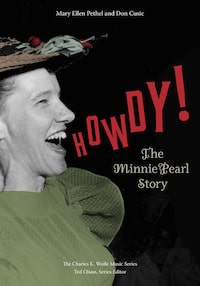
The Charles K. Wolfe Series, published by the respected University of Tennessee Press, comprises numerous outstanding books about country, Bluegrass, and folk music, and this latest addition is no exception. “Howdy!” is a biography of Sarah Ophelia Colley, perhaps better known to country music fans as “Minnie Pearl” of “Grand Ole Opry” and “Hee Haw” fame.
The book, written by Mary Ellen Pethel and Don Cusic, both of Belmont University, is well written, easy to read, and follows a narrative structure, with descriptive passages that bring her story to life. The publishers have seemingly gone all out to produce a lavish 7” by 10” volume filled with some 150 colour and black-and-white photographs. The University of Tennessee Press’s high-quality publishing standards are evident throughout the book.


Sarah Ophelia Colley was born in Centerville, Tennessee, in 1912, and studied theatre at Nashville’s stylish Ward-Belmont School, now known as Belmont University. She is best remembered for her alter ego, “Cousin Minnie Pearl” – an unmarried Southern woman from the fictional town of Grinder’s Switch, itself based on Centerville.
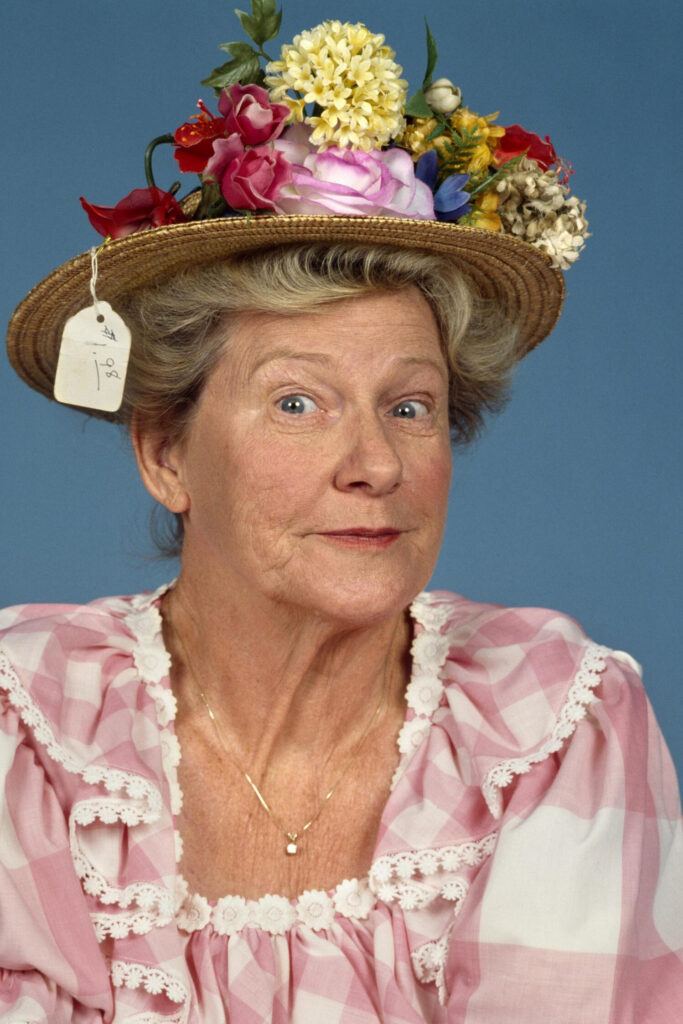
Dressed in frilly, down-home dresses and wearing a hat with a $1.98 price tag, she entertained Grand Ole Opry audiences for nearly fifty years, beginning in 1940, often opening her segments with “Howdeee, I’m just so proud to be here,” which inspired the title of this book. Later, she appeared on the television show “Hee Haw.”
Her humour was mainly self-deprecating and frequently included stories about attracting a fellow’s attention or exaggerated tales about her imaginary relatives, like “Uncle Nabob.” She inspired and influenced June Carter, who developed her own comedy routines while performing with her mother, Maybelle, and sisters, Helen and Anita. Importantly, the book goes some way to filling the void of documenting country-music comedians and comediennes.
The authors have selected some fascinating images of her teenage years, her formal education, and her upbringing. Her father was a kindly man with a talent for embellishing stories and a discordant view of organized religion. In contrast, her mother was deeply pious and played the piano and organ at the local church.
Sarah’s early struggles as an actress and entertainer are well documented and ultimately led to her performance on “The Grand Ole Opry” in 1940. Country music fans will especially enjoy her stories about the Opry and the stars who performed there, like the “hillbilly Shakespeare,” Hank Williams.
I was pleased that the authors described Minnie singing “I Saw The Light” with an inebriated Williams, only for him to reflect that there wasn’t any light—one of the poignant moments in country music.
Importantly, Pethel and Cusic do not avoid Sarah’s controversial support for George Wallace’s 1958 political campaign. Wallace was a committed segregationist, but the authors suggest that her motivation was probably more about money than politics. However, they admit that understanding her reasons for supporting Wallace is difficult.
Still, when Wallace won the governorship of Alabama in 1962, his segregationist policies had significant political and social effects, which are clearly outlined in the book. Sarah’s involvement with a fast-food chicken chain (“Minnie Pearl’s Fried Chicken”) that failed in 1970 is also discussed. By then, she was a respected member of Nashville’s society by day and a lively comedienne on the Opry and on television’s “Hee Haw” at other times.
Over the years, Minnie was a friend and mentor to many Opry stars, many of whom are discussed in the book. The authors have even selected comments from country music artists about their memories of and respect for her. They range from long-time Opry members like Bill Anderson and Jeany Seely through to Garth Brooks and Dwight Yoakam, demonstrating she was a colleague of older and newer artists alike.
I highly recommend this book.