James E. Akenson
In 1944 Swedish sociologist Gunnar Myrdal published An American Dilemma: The Negro Problem and American Democracy. It focused on the question of race in the U.S. and the disparities for African Americans maintained by the white power structure. Myrdal helped raise consciousness of racial disparities.
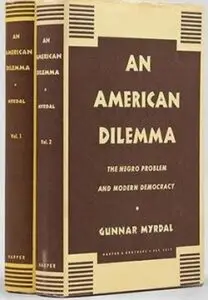
The American Creed based on individualism, civil liberties and equal opportunity…imperfect as it was…particularly didn’t apply to African Americans. An American Dilemma had an impact on the Brown vs. Board of Education U.S. Supreme Court decision declaring racially segregated schools as unconstitutional.
Despite horrific disparities the accomplishments of African Americans prove remarkable long before the 1960s Civil Rights movement. Let’s quickly mention a long list ranging from the invention of the traffic signal to air conditioning. Let’s just say that the African American contribution to Country Music is extensive.
Let’s focus on establishing the basic African American engagement to Country Music since even today it’s hard for some folks to realize. If you see postings on Facebook that a relationship “Is Complicated” you know that it is in danger. In the case of Country Music and the African American involvement it indeed “Is Complicated” in ways that make a Facebook post look simple.
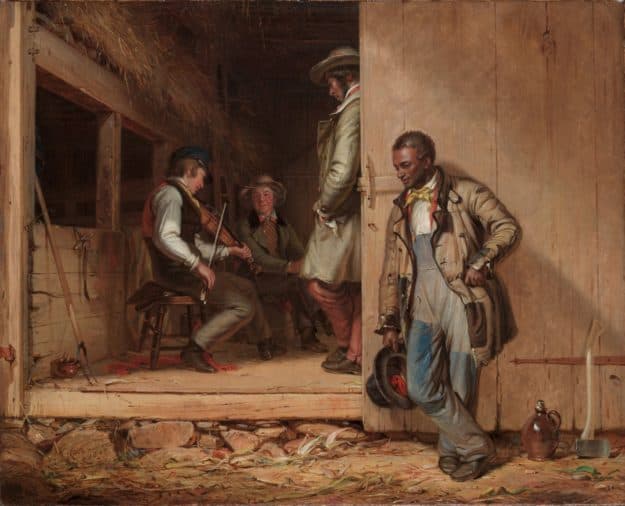
We can boil it down to a single visual. In 1847 William Sydney Mount painted The Power of Music (above). It looks simple yet shows some important aspects of life in the United States. Set in Long Island, New York it doesn’t even fit the southern expectations of Country Music. The Power of Music looks idyllic. The fiddle player and two companions are inside a barn. An African American male leans against the opening of the sliding barn door. The frame created by the barn symbolizes the dominant culture of the men inside. The African American male is outside the frame….outside of inclusion in the dominant culture.
No, The Power of Music doesn’t show the African American male contributing to the music. It does suggest the overall problem in United States culture. Despite the many contributions to Country Music African Americans remain outside the main frame of the Country Music ‘painting.’ This despite that contributions took place with whites and African Americans interacting with each other up close and personal. It just wasn’t hearing African American artists on radio, phonograph, film, and now streaming.
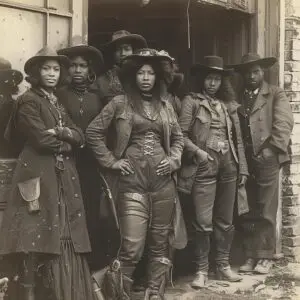
It’s a bit like with the ‘Wild West’ and cowboys. Not only were there lots of African American Cowboys, there were lots of African American Cowgirls. I’ve not been surprised by all the recent information about African Americans and Country Music. I always liked Country Music somewhat. But when LP (Life Partner) Mickie and I came to Tennessee Tech I really started to see how I could use it in my social studies teaching methods classes. I started reading and listening more than ever.
One of the first scholarly articles I read dealt with Black and White Cultural Interaction in the Early Twentieth Century South: Race and Hillbilly Music. It was published by an Historically Black College and University. It surprised me, being from Minnesota in the Mid West, that African Americans and Whites interacted so often around the music. It didn’t change the racial order, but the separation of the races was a touch more complex than I had thought. It built on courses I had at the University of Minnesota on African American history and History of the South. Thank you Dr. Alan Spear and Dr. David Noble.
Of course, I read Nolan Porterfield’s great biography of Jimmie Rodgers as soon as it was published. Jimmie Rodgers: The Life and Times of America’s Blue Yodeler included important aspects of the African American impact on Country Music. Rodger’s career breakthrough Blue Yodel known as T for Texas followed the Blues format used by African Americans. Turns out Jimmie Rodgers worked on the railroad bringing water to African American workers known as Gandy Dancers. And Rodgers’ signature Blue Yodel may have been influenced by the Gandy Dancers. Little did I know. Come to think of it. I still don’t know a lot.
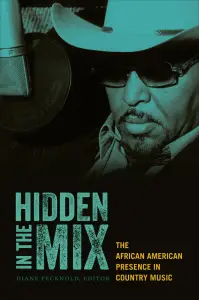 Throughout the years I learned more from reading and attending the International Country Music Conference. Scholarly interest in the African American impact in Country Music perked along. Books such as the 2013 Hidden In the Mix advanced the varied impact of African Americans. The 2020 police murder of George Floyd in Minneapolis, Minnesota, though, changed things. Urgency about African American participation in Country Music on all levels mushroomed.
A variety of discussions brought the nature of the Country Music industry to deal with the African American experience. Nashville Music Equality emerged to provide discussions such as The Experiences of Black Journalists and the Responsibilities of White Journalists in Nashville.” 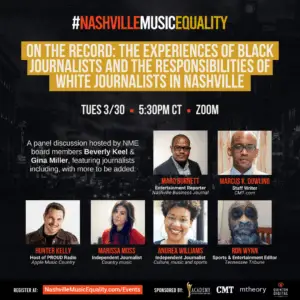 So sad, but not surprising, to learn of the many slights experienced by Black Country Music executives, artists, and fans. Even with an official back stage credential, an African American might be asked why they are back stage. The difficulties for early Black artists such as Ruby Falls. Linda Martell, Cleve Francis and current artists such as Mickey Guyton became crystal clear.
Holly G made the Black Opry an advocate for Black Country Music artists. She publicized Black artists and arranged for concerts. Holly G and Black artists participated at the 2023 International Country Music Conference. The Black Country Music Association assumed advocacy. The 2021 Americana Festival included a discussion of the Black experience Artists such as Rissi Palmer became visible with an influential “Color Me Country” podcast. Academics such as Francesca Royster published books on African American Country Music that included national book tours and presentations at the International Country Music Conference.
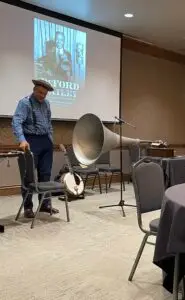
Artist and scholar Dom Flemons and Rhiannon Giddens made The Carolina Chocolate Drops and the African American string band tradition famous. This despite earlier work by organizations such as the Center for the Study of Southern Folklore. Flemons and Giddens went their separate ways and both built musical and concert legacies. Flemons provided a remarkable keynote experience to the 2025 International Country Music Conference.
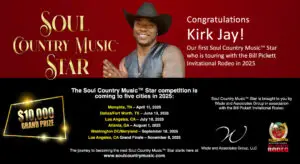
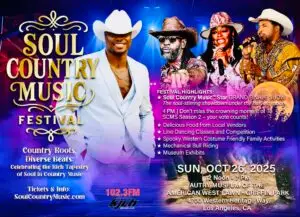
 The Soul Country Music Star talent contest began in Memphis, Tennessee 11 April 2025 traveling to four other cities before the Grand Finale in Los Angeles, California on 8 November 2025. Check out the pic of Kirk Jay. He certainly looks Country and is also touring with a rodeo named for famous African American cowboy Bill Pickett. There’s also a “Black Banjo and Fiddle Fellowship.”
Just recently, I participated a bit in the scholarship about African American covers of Country Music. Friend and colleague Tim Dodge of Auburn University completed his African American Covers of Country Music book. The publisher asked if I could write some publicity sentences. I previously had heard Tim Dodge discuss African American covers at the International Country Music Conference. Now I got to read the book as well. I came up with several different sentence ‘packages.’
How about this. “Covers Not Copies. Tim Dodge’s clear distinction gives African American Covers it’s focus. With deep understanding of the complexities of cultural interaction even for Beyonce and Shaboozey, Dodge adds a new layer to our understanding of Country Music.”
 I tried to make this statement very up to date with cultural tensions. Not everybody is happy that Beyonce recorded a Country Music song. Not everybody is happy that Beyonce performed on the Country Music Association Awards program. Not everybody wants to think of Beyonce as performing Country Music.
 I guess you could say that the African American impact on Country Music is immense. Wouldn’t be an overstatement. The exploding interest after the murder of George Floyd taught me more. I wasn’t surprised by the increased information. I was a bit surprised that so many people didn’t have an inkling of the magnitude of the African American contribution to Country Music. Or…the difficulties that African Americans experienced…and continue to experience…in Country Music.
Granted, the likes of Kane Brown and Shaboozy on Country Music radio and other surface changes are visible. Like the rest of U.S. culture, though, there is a ways to go in terms of African American participation. Since Gunnar Myrdahl’s 1944 An American Dilemma the U.S. has probably come a thousand miles in terms of race. There just might be another thousand miles to travel.
I lucked out. I learned of the African American contribution to Country music from ‘day one’ and it grew deeper and wider…sounds like an old Gospel song…over the years. I still have a ways to go. It’s like all of the African American contributions to U.S. culture. They’re immense.
I just recently learned about African American inventions such Mary Walton’s smoke reduction system for railroad engines. Sara Jacobs invented the Murphy bed. Richard Spikes invented the automatic gear shift for cars. How about the previously mentioned air conditioning and the stoplight. It doesn’t end. No matter the flaws in U.S. history and the U.S. today, you can count on one thing. Country Music and the African American experience walk hand-in-hand. Now and forever. Amen.